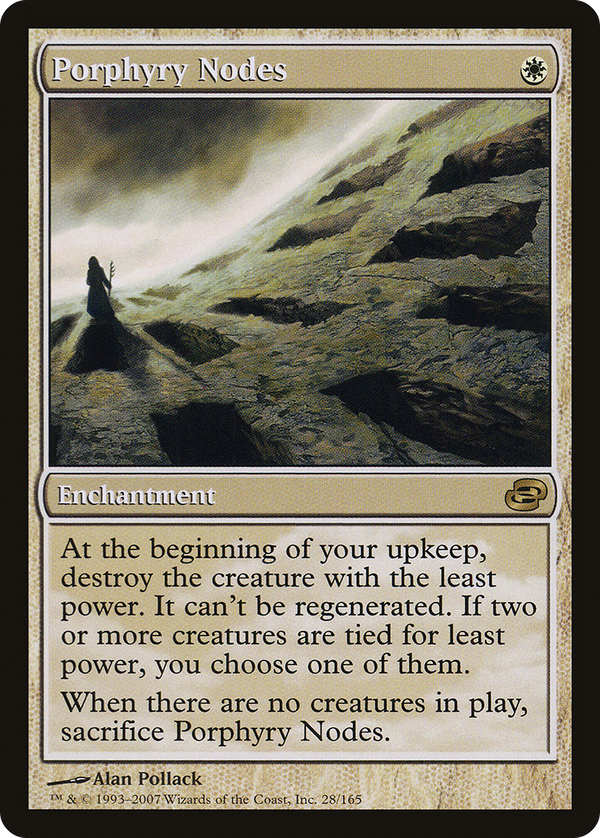
Porphyry Nodes

Black has always owned the edict: force a sacrifice and let the opponent keep the body that hurts least. Color-shifting asked what that pressure would look like rebuilt in white's grammar, and the answer trades player choice for a standing rule. Every upkeep the creature with the least power dies, you break ties, and regeneration is off the table. The cruelty is structural rather than chosen: it always finds the smallest body, so a swarm of one-power tokens loses a member each turn while a deck of small, efficient creatures simply bleeds out over a sequence of upkeeps. The trap is that the cull reads power, not threat or cost, so your own utility creatures and tokens are usually the ones nearest the bottom and go first; even a lone fatty is, by definition, the creature with the least power and dies to the Nodes controller's upkeep if nothing smaller stands beneath it. That makes the enchantment a tool for decks fielding outsized threats against go-wide, go-small plans, where your large bodies sit above the cull line and theirs do not. The self-sacrifice clause keeps it from lingering once the board empties. As color-pie engineering it argues that white's removal identity can stretch past instant-speed exiles and sweepers into slow, attritional, rules-governed pruning: destruction with no target line at all, where the board state itself decides who dies each turn.