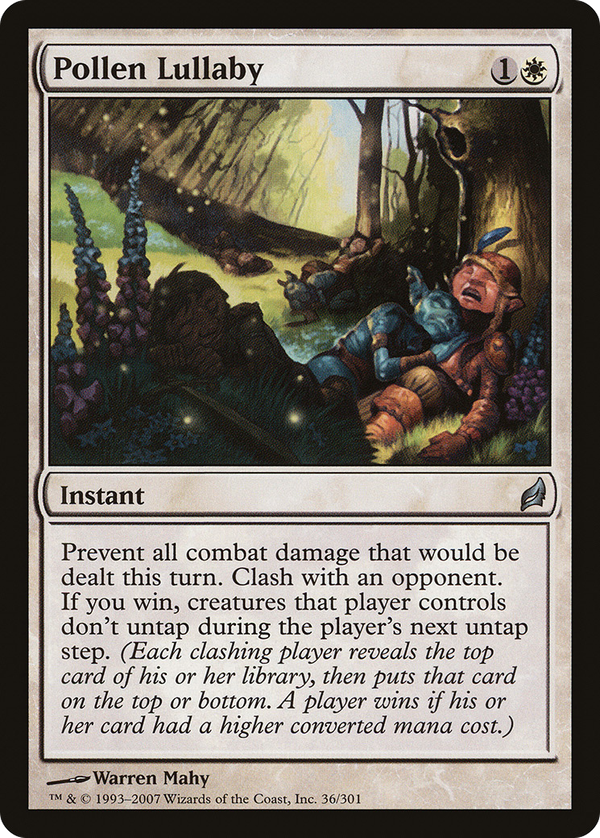
Pollen Lullaby


The first half is a clean, complete effect: a two-mana fog that buys a turn against any attack, instant-speed insurance no matter how many creatures are pointed at your face. The rider is where the gamble lives. Clash makes it conditional on a reveal weighted by your library's mana curve: win, and the opponent's creatures stay tapped through their next untap step, turning a defensive turn into a tempo swing that strands their whole board for a full cycle. Lose, and you've still fogged, but the upside evaporates. That structure is the appeal: the floor is a card you'd run anyway, and the bonus reaches toward a one-turn Stasis effect for that player, paid not by extra mana but by the randomness of the reveal. The wrinkle is that you choose where the revealed card lands afterward, top or bottom, so a clash isn't pure variance: it's a chance to fix your next draw whether you win or lose the flip. It wants a deck built top-heavy enough to reliably win the clash without warping its curve so badly it stalls. As mechanical design it captures what clash was reaching for: a way to attach a real bonus to a baseline effect without the bonus ever being free, with the deckbuilder paying for consistency in card-selection slots rather than in mana.