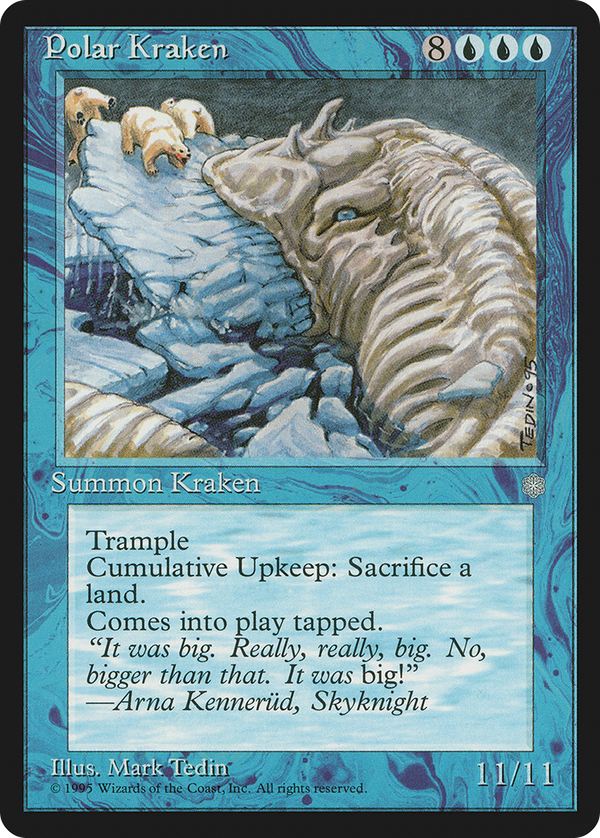
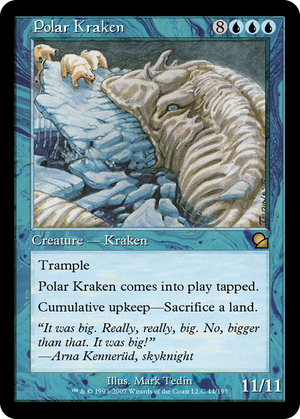
Polar Kraken


The 11/11 trample body reads as nearly unkillable through combat by 1995 standards, and every other line on the card exists to make sure you never own that body for long. Cumulative upkeep here is the mechanic at its harshest: an age counter lands every turn, and you sacrifice a land for each one, so the bleed starts at one land and accelerates until your manabase folds under the weight. It enters tapped, denying you even the turn-it-arrives swing, which means the clock against you begins before the kraken can do a single point of work. The design is brutally honest about its bargain: eleven mana deploys it, then you keep paying in the exact resource that produced that mana to begin with, with no recursion, no enters-the-battlefield value, and no way to slow the drain once it starts. There is no engine to build around it; the math demands you close the game out fast, which is what the trample is doing, a single concession toward speed in a card whose every other line works against you. As mechanical history it captures an era when Wizards leaned on upkeep taxes to balance raw size, well before the design language settled on enters-the-battlefield payoffs and finality counters to keep enormous threats in check. The body promises to end games; the cost structure promises you are racing your own land count to get there.