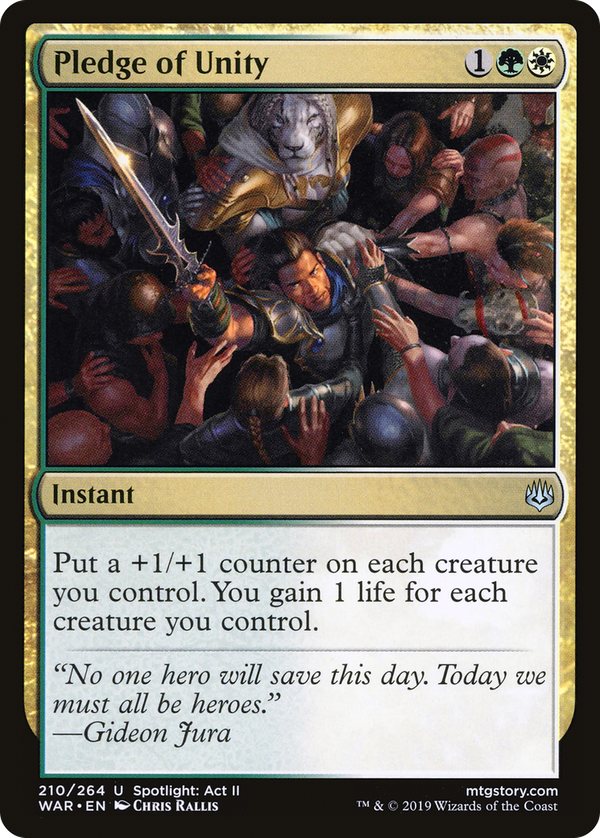
Pledge of Unity



The double-scaling is the whole design: both halves read off the same creature count, so the card wants a board already crowded before it ever hits the stack. The +1/+1 counters are permanent, which separates it from the pump-then-fade combat tricks green and white have printed since the earliest sets: the buff stays through the end step, so a token-heavy board that survives one turn stays larger deep into the game. The lifegain scales off that same width, and it is the second axis that lifts this past a plain anthem trick. Cast in response to a sweeper on a thin board and you gain almost nothing; cast with a table full of tokens and the life you bank can decide a race as squarely as the counters do. That is the tension the card is built around: it demands a go-wide green-white deck already committed to the ground, and it rewards holding it up at instant speed to blow out a combat step or a damage race rather than sinking it in on your own turn. It is a poor answer to a board wipe, since counters do nothing for creatures about to die; ahead on the ground, it hands you a permanent size advantage and a life cushion in a single card, which is precisely what a token strategy is hunting for.