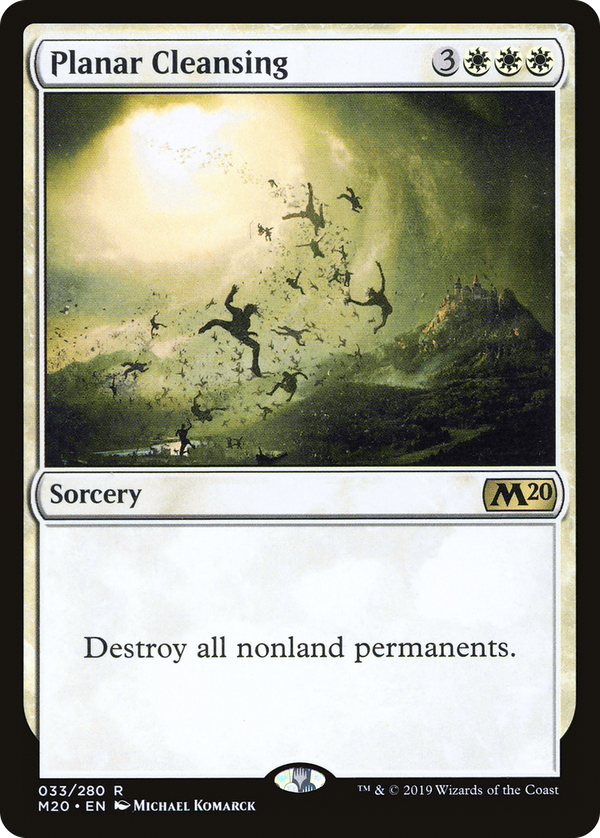
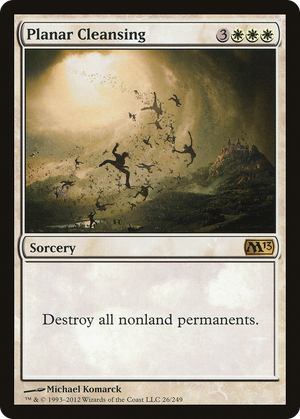
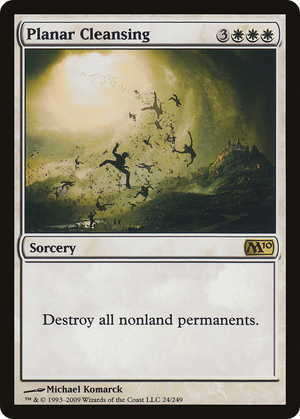
Planar Cleansing


Wrath of God sweeps creatures and leaves the rest of the board intact; this trades that surgical precision for total reset, at the cost of two extra mana and a deeper white commitment. Destroying all nonland permanents means your own artifacts, enchantments, and planeswalkers go to the graveyard alongside the opponent's, which makes it a deliberately symmetrical reset rather than a tempo play. The triple-white pip and six-mana price tag mark it as a card built for control decks that intend to be the last player still developing a board, the deck that can afford to wipe everything and then rebuild from an empty table. Where a creature-only sweeper rewards you for stranding the opponent's noncreature threats, this one answers the problems a Wrath leaves behind: the resolved planeswalker, the artifact engine, the enchantment lock that keeps grinding after the bodies are gone. That breadth is the whole reason to pay the premium. White has returned to this mass-destruction template repeatedly across the years, tuning the cost and the exceptions each time, but the core question this design poses stays constant: when the only clean answer is to destroy everything you do not own in land, can you build a deck that survives destroying everything you do?