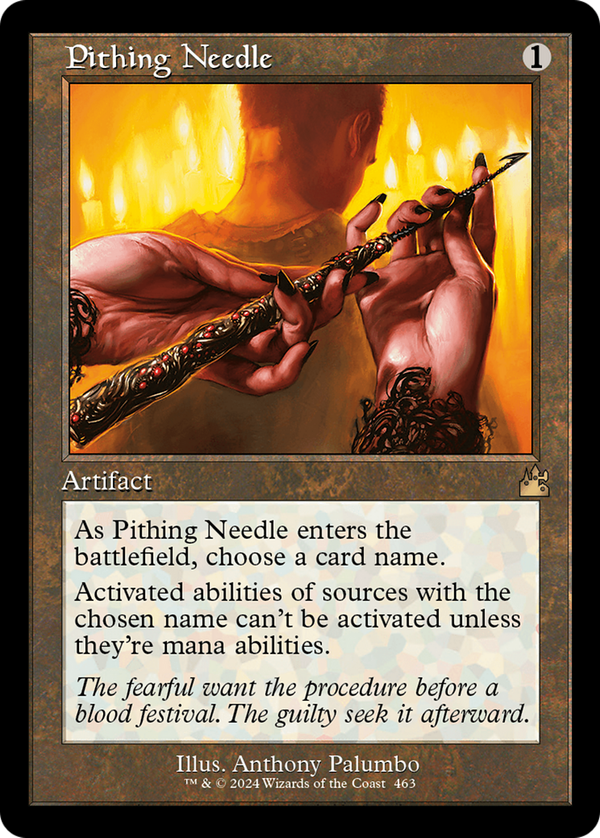
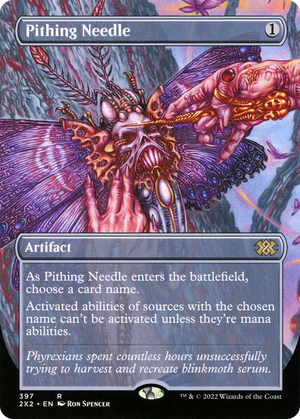
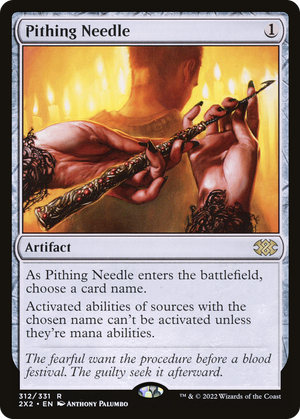
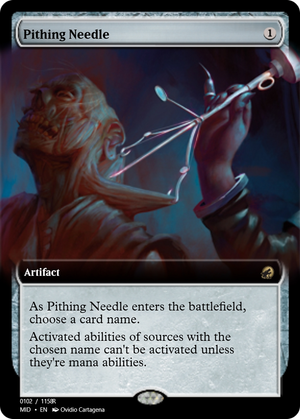
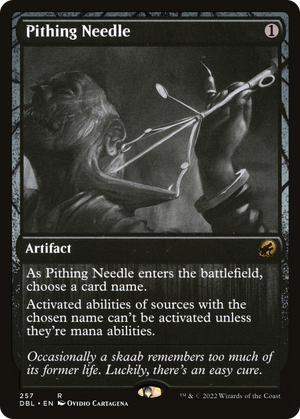
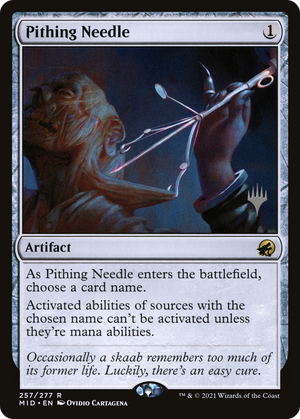
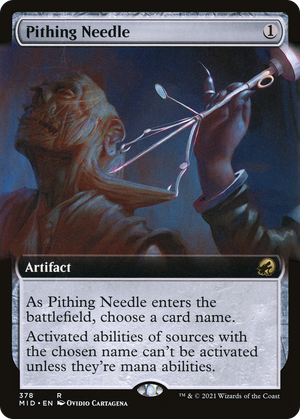
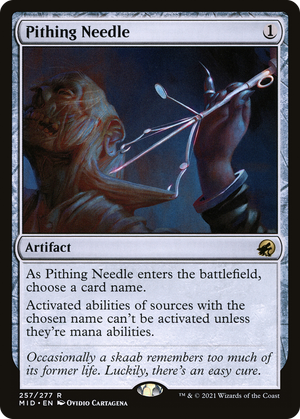
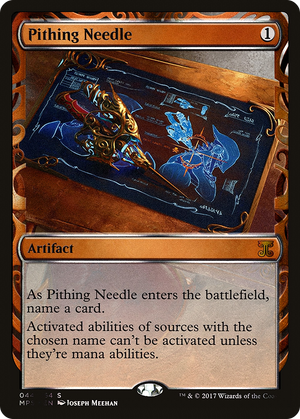
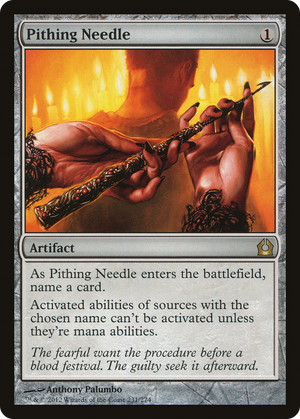
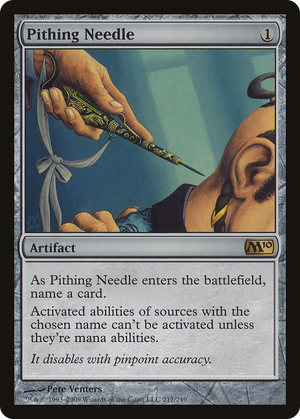
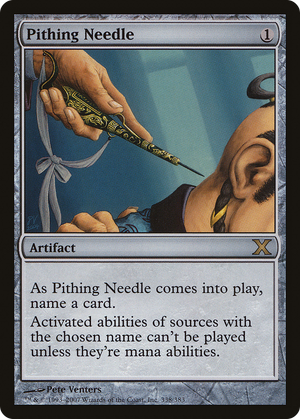
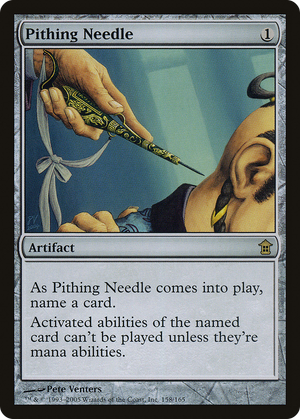
Pithing Needle

Name a card on the way in and turn its activated abilities off. That single sentence is the design, and it reshaped how the game thinks about answers. Most hate aimed at an opposing engine destroys a permanent: kill the creature, crack the artifact, blow up the troublesome thing. This points at the name instead, which means it neutralizes the ability without ever touching the permanent, dodges destruction-triggered comeback value, and answers activations that destruction cannot reach (a manland's animation, a fetchland's crack, a combo piece you can scout from across the table). The carve-out for mana abilities is what stops it from being a Strip Mine impression: it shuts down the value engine but leaves the mana base alone, so you cannot lock a player off their lands. Its real signature is preemption. Because the name is chosen as it enters, it can land before the threat does, declaring "your tutor outlet does not function" a turn early. That makes it a planning tool as much as a reactive one, and it rewards knowing exactly which activation in your opponent's deck is load-bearing. The cost is precision: it disables one name, so a wrong call against a deck with redundancy is a dead artifact on the table. It set the template for the named-card answer, the lineage that later included Sorcerous Spyglass and Phyrexian Revoker, but the original remains the most economical statement of the idea: one mana, no body to lose, and the widest list of legal targets.