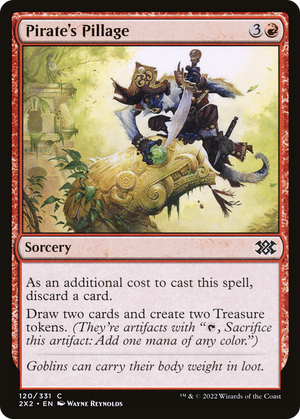
Pirate's Pillage


The discard is not a tax; it is the whole premise. Feed a dead card in, and the spell hands back two live ones plus two mana rocks, so the exchange reads less like resource attrition and more like filtering that nets tempo on the back end. What separates this from the standard red rummaging effect (the Tormenting Voice family, where you discard one to draw two and stop there) is the Treasures. They ramp into the same turn, and they hand a mono-red shell access to colors it would otherwise never touch, which is the more radical piece: red rarely got to fix its mana through card advantage rather than lands. The discard cost is the honest ceiling on all that value. A four-mana spell that demands you already hold a spare card is at its weakest when your hand is empty, which is precisely the moment you most want to refill, so the payoff and the requirement pull against each other by design. That self-correcting tension (rewarding a stocked grip, punishing a starved one) is what keeps a spell this dense in resources from being a strict upgrade on the cheaper rummaging effects it descends from. The Treasures are single-use, spending themselves for mana the moment they matter, so the ramp and fixing happen once and then the tokens are gone; the value is front-loaded, not a lingering artifact-count engine.
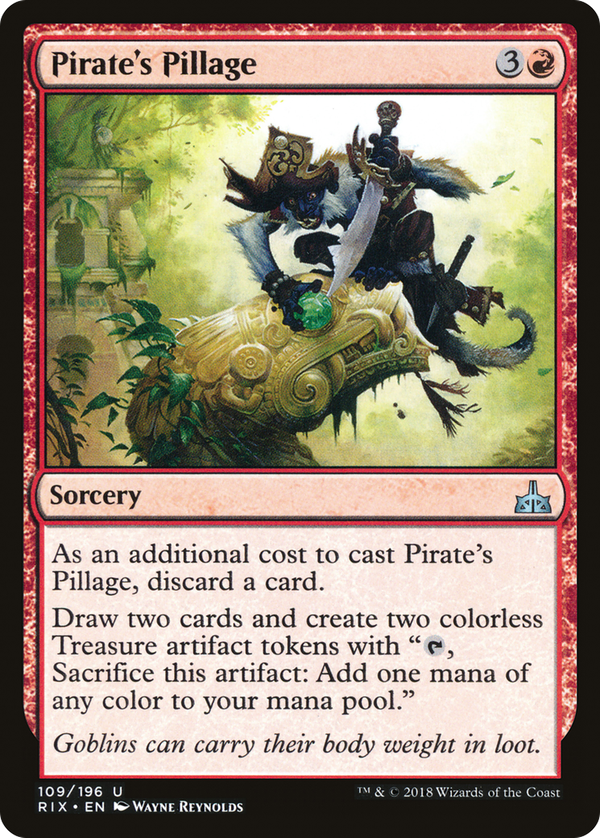
Rules text
 , Sacrifice this token: Add one mana of any color.")