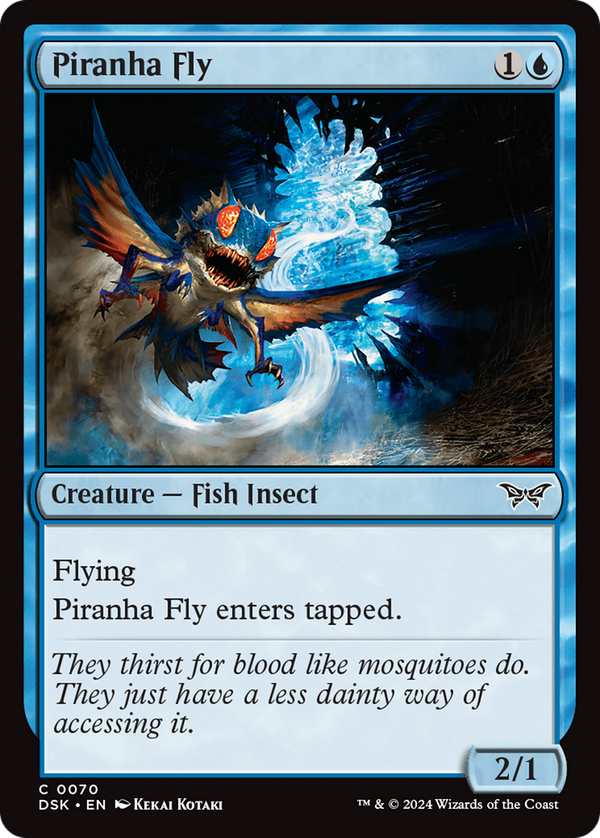
Piranha Fly


The tapped-entry clause is the entire cost analysis here. A 2/1 flyer for two mana is exactly the rate blue evasive beaters have carried since the early years: the kind of body that pressures planeswalkers and chips in for the last points a control deck needs. Entering tapped is the brake that keeps that aggression honest. Summoning sickness already stops the creature from swinging the turn it lands, so the tap is not about denying the first attack: it is about denying the first block. Absent the clause, a freshly deployed flyer could sit back as an air-defense body, a two-power wall against the opponent's own evasive threat or a way to trade up in the sky the following turn. Entering tapped strips that option for a full rotation, leaving the card unable to defend the turn it arrives and exposed to anything that punishes tapped creatures. Designers reach for this restriction when a stat line runs a hair too hot, and it is a cleaner lever than shaving a point of power or adding a mana: the body stays a real clock, just one that cannot moonlight as a blocker on the way in. That is the point of the whole design. A body that could enter untapped would blur the line between clock and defensive tool; forcing it to sit for a turn keeps it committed to offense, a flyer you deploy early and leave to do its slow, evasive work.