Piper Wright, Publick Reporter


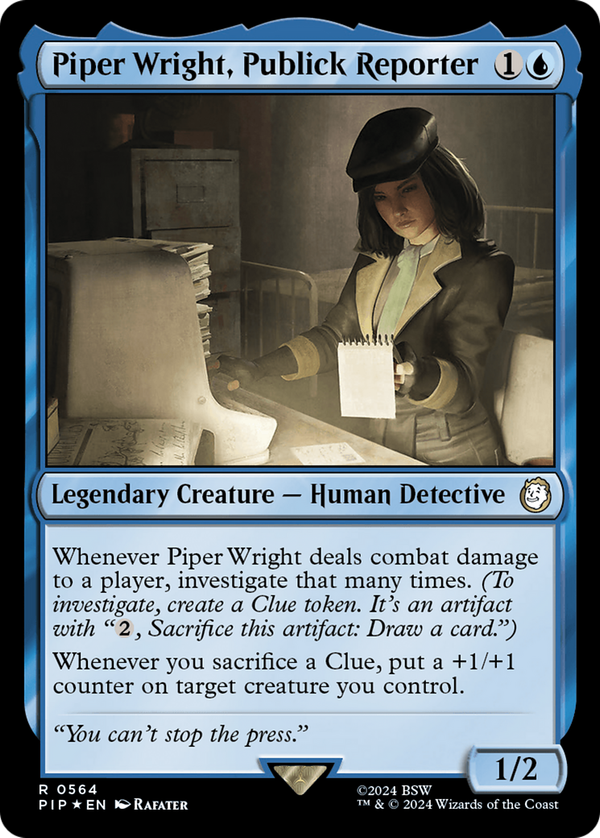
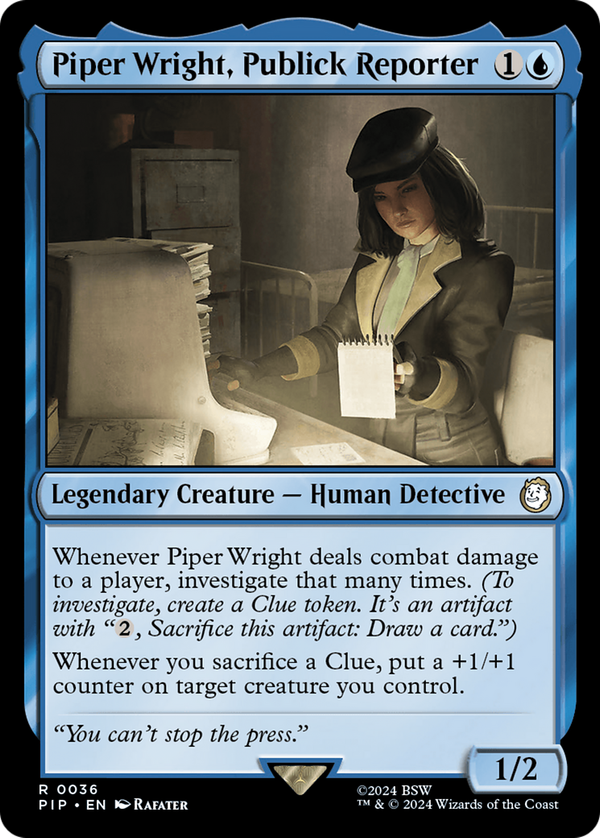
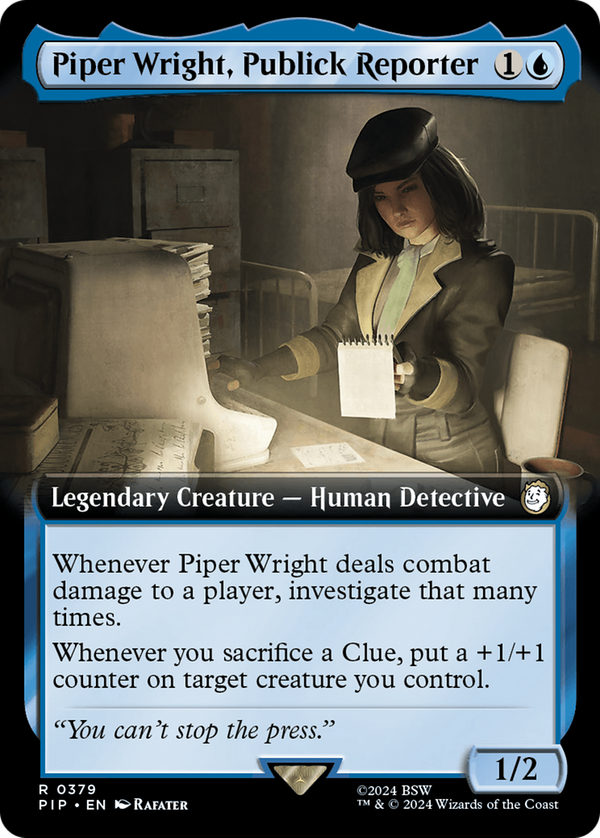
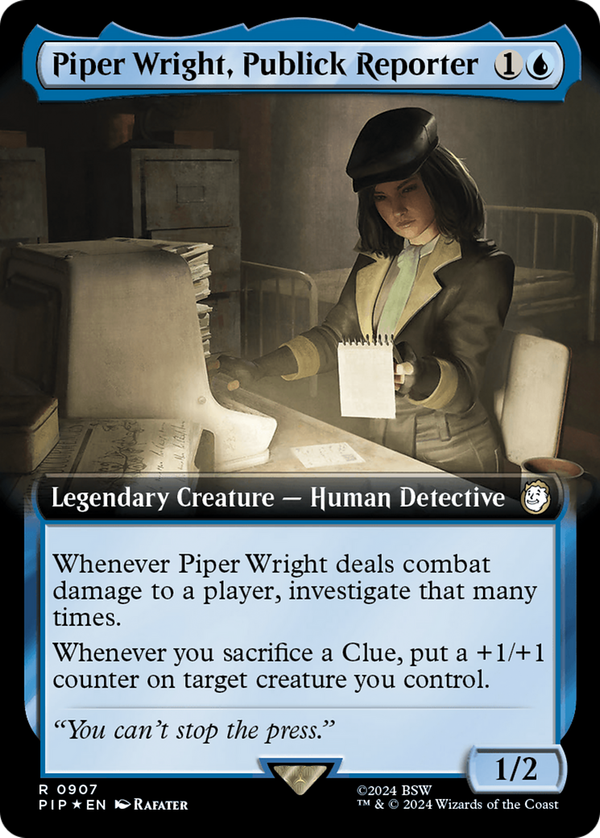
Clue tokens usually read as inevitability parked in the future: pay two, sacrifice, draw a card, someday. This design closes the loop from both ends and turns that latency into pressure. On the front end, connecting in combat manufactures Clues in bulk, one per point of damage rather than the usual single token off a trigger; the 1/2 body means the count starts small and scales with any evasion or pump you can hang on it. On the back end, cashing a Clue no longer just refills the hand: each sacrifice grows a creature, so hoarding the reserve becomes the wrong line. That second clause is the more interesting piece of engineering, because it retrofits an entire artifact-token subtype into a source of on-demand +1/+1 counters. Every Clue anyone gave you, from a scry-cantrip enters-the-battlefield effect to any survivor-flavored token generator, now doubles as a growth counter the moment you cash it. The tension the design resolves is that Clues have always been the slowest form of card advantage in the game, deliberately taxed so they cannot snowball; this makes the tax itself productive, converting the two-mana sacrifice into board development you were paying for anyway. It is a small, self-sufficient value engine that rewards emptying the reserve on purpose, the specific line most Clue decks never bother to take.
Rules text
 , Sacrifice this token: Draw a card.")
Whenever you sacrifice a Clue, put a +1/+1 counter on target creature you control.
, Sacrifice this token: Draw a card.")
Whenever you sacrifice a Clue, put a +1/+1 counter on target creature you control.