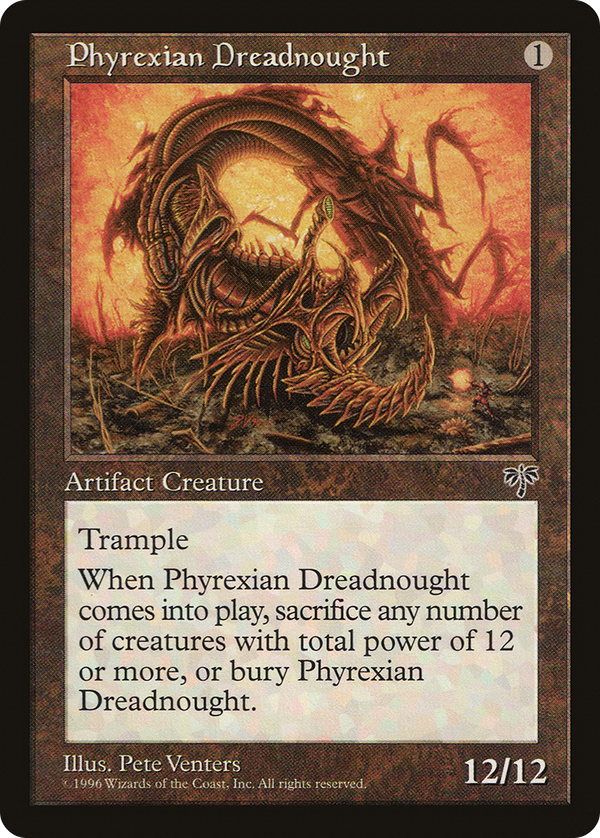
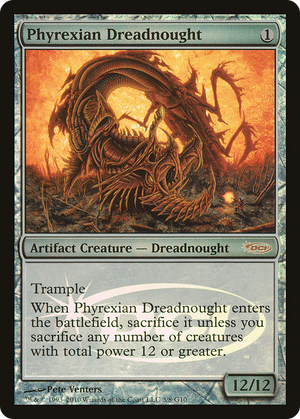
Phyrexian Dreadnought

A 12/12 trampler for one mana is a deliberate trap, and the entire design hinges on the comma in its second line. The drawback is not a downside stapled to a creature: it is the actual cost, paid after the creature is already on the battlefield, with a tax (sacrifice creatures totaling power 12 or greater) so steep that paying it honestly defeats the point. What makes the design durable is the window the trigger creates. Because the sacrifice clause is a triggered ability that uses the stack, you have a chance to act before it resolves, and there are two distinct ways to keep the body. Stifle does the cleanest version: it counters the ability outright, so the sacrifice clause never asks for anything. Vision Charm takes the other route, phasing the Dreadnought out so the trigger has no creature to sacrifice and does nothing on resolution. The two answers attack different links in the same chain, but both leave a free 12/12 standing. Note what does not work: bouncing returns the Dreadnought to hand, and flickering re-enters it, retriggering the sacrifice clause from scratch. That interaction has anchored a recurring blue tempo archetype across multiple eras, the kind of deck that treats a printed drawback as a puzzle rather than a price. The card's true power lives in the timing of its abilities rather than its numbers, and "enters, then sacrifice" has been a load-bearing template ever since: the gap between entering and resolving is where the whole card lives.