Petty Larceny


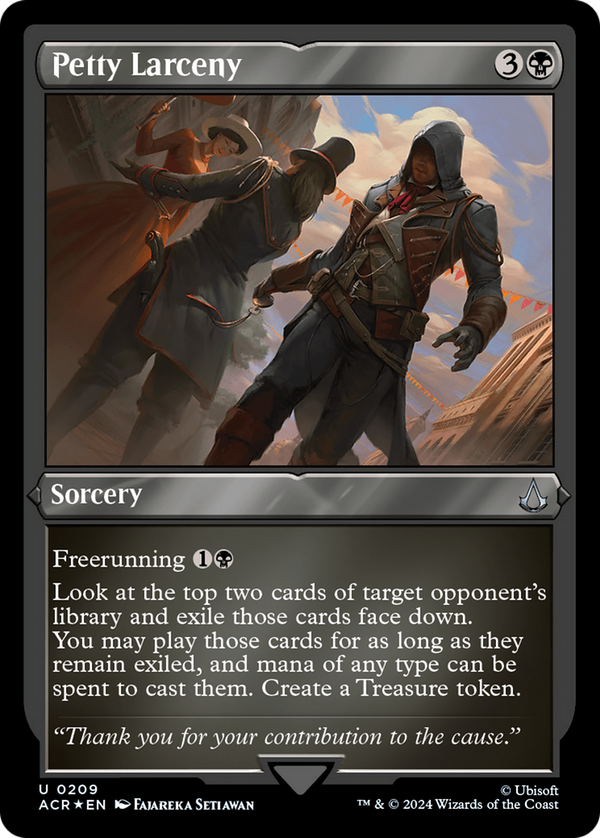
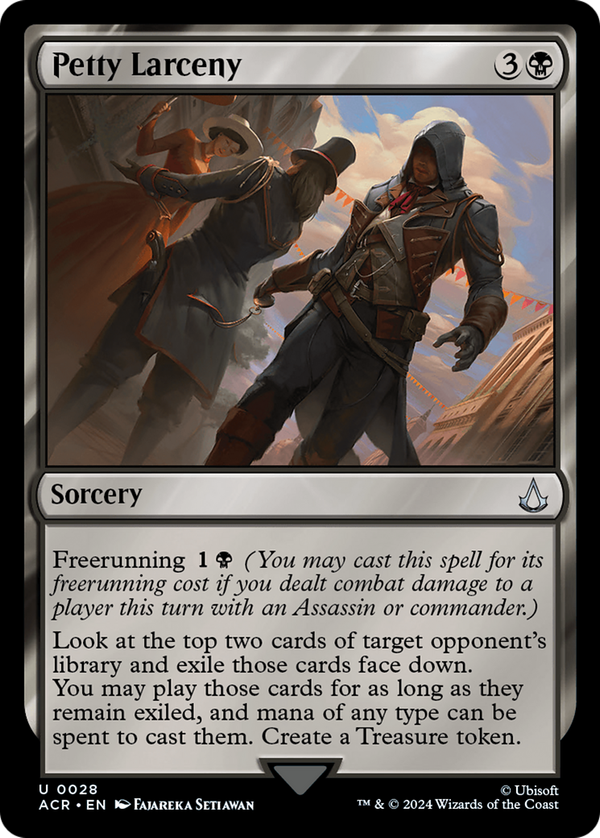
Theft-based card advantage in black has always carried an asterisk: you steal cards you cannot cast, because they are the wrong colors and you are the mono-black deck that cannot pay for them. This one closes that gap by attaching "mana of any type" to the exiled cards, turning two opposing draws into fully castable resources and folding a Treasure on top to help bankroll them. That is the design tension it resolves, and it is why the effect reads richer than a simple top-of-library peel. The freerunning cost is where the card earns its place: pay full price as a straightforward sorcery, or, once a qualifying attacker has connected, cast it for a fraction later that same turn. As a sorcery it lands in your post-combat main phase, so the discount rewards a deck that swings first and steals second: the combat damage you dealt a step earlier converts into a cheaper theft rather than a separate turn's investment. The reward scales with the aggression: the more reliably you land that combat trigger, the closer this drifts to a two-mana card that steals two cards and mints a Treasure. Freerunning is functionally a conditional cost reduction gated behind board development, which is a cleaner way to price aggressive card advantage than the usual life payment or exile clause: the discount exists only when you have done the work of connecting, and the full cost keeps it fair when you have not.
Rules text
 (You may cast this spell for its freerunning cost if you dealt combat damage to a player this turn with an Assassin or commander.)
Look at the top two cards of target opponent's library and exile those cards face down. You may play those cards for as long as they remain exiled, and mana of any type can be spent to cast them. Create a Treasure token.
(You may cast this spell for its freerunning cost if you dealt combat damage to a player this turn with an Assassin or commander.)
Look at the top two cards of target opponent's library and exile those cards face down. You may play those cards for as long as they remain exiled, and mana of any type can be spent to cast them. Create a Treasure token.