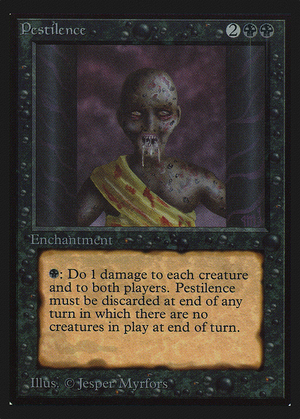
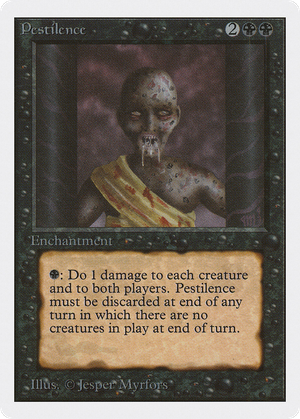
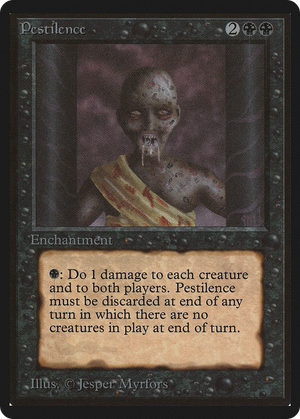
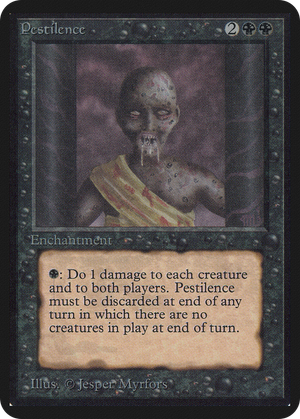
Pestilence


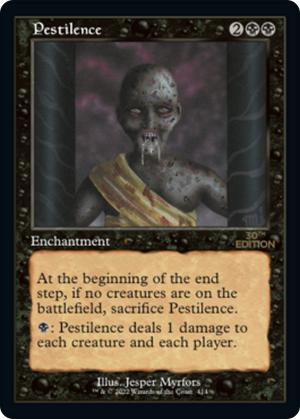
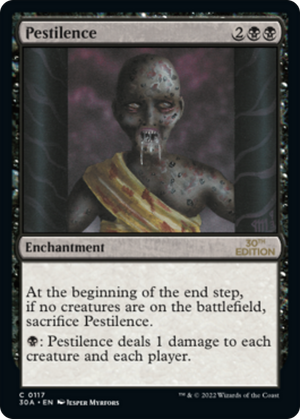
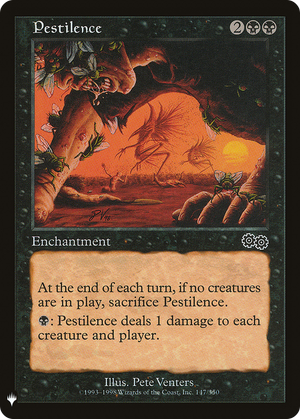
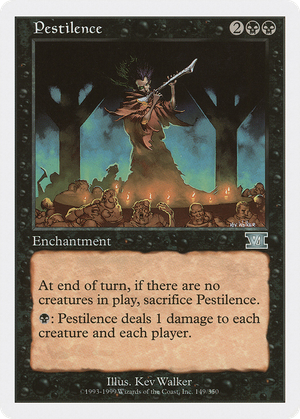
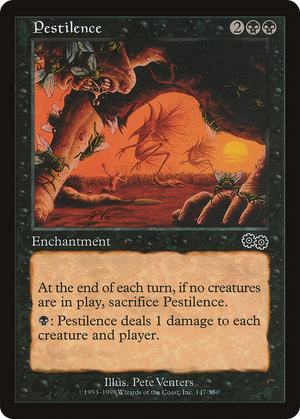
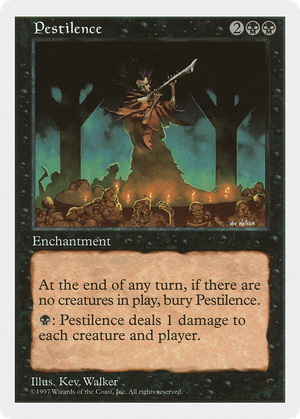
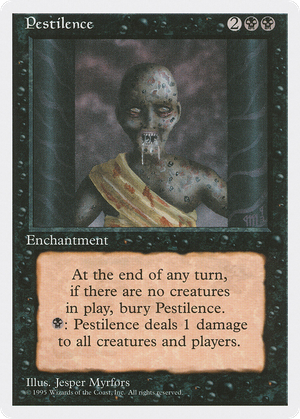
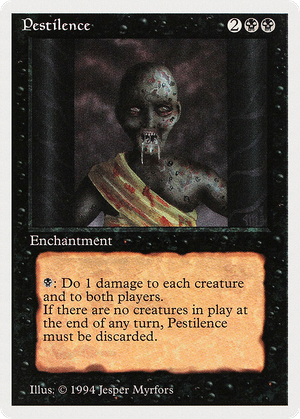
Mono-black control of the nineties was built on a single idea: take the damage, ping the table, and outlast a board you slowly grind to ash. This is the engine that idea ran on, and the archetype that took its name, Pestilence Control, defined the format then called Type 1.5. The activated ability is repeatable at one black mana per point of damage, so with a healthy life total and some lifegain you can clear most boards over a few activations while your opponent's clock stalls. What keeps the symmetry honest is the end-step sacrifice trigger: without it, an enchantment that pings every creature and player on demand would be a one-card lock, but requiring a creature to survive into the end step turns the engine into a tension rather than a button. You need a body that outlasts your own pings (high toughness, or protection from black like Cemetery Gate) or a way to sequence activations so something sticks around. That pattern (cheap, repeatable, symmetrical damage gated by a sacrifice trigger) became a black design idiom Wizards has revisited in cards like Pestilence Demon and Thrashing Wumpus. It is also a clean snapshot of early-era black: taking the damage and pinging the table were what the color did when removal was still expensive and conditional.
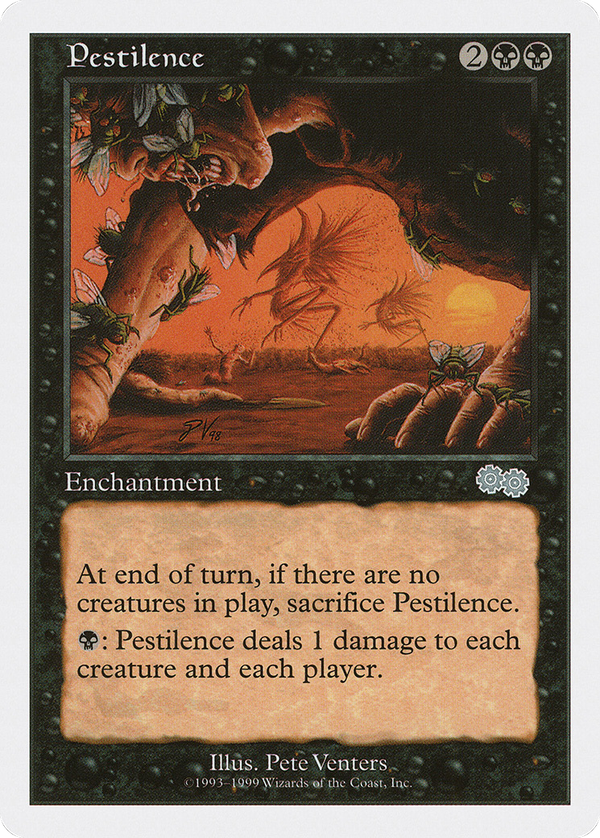
Rules text
: This enchantment deals 1 damage to each creature and each player.