Pedantic Learning

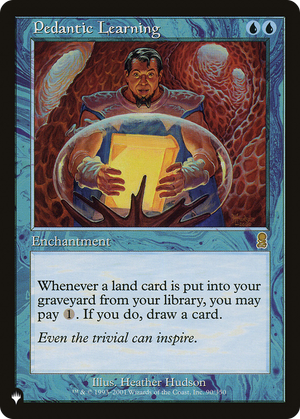
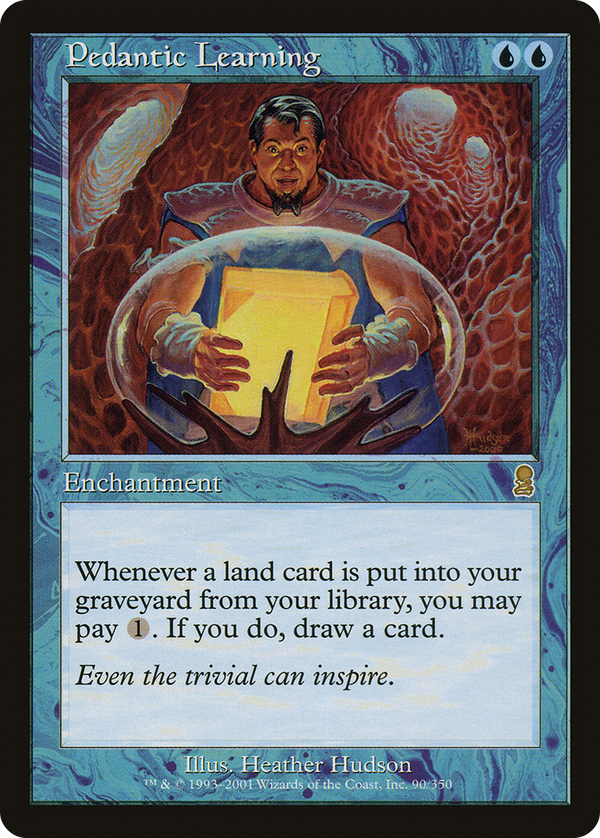
The trigger is narrower than it looks, and that narrowness is the whole design. It fires only when a land card moves directly from your library into your graveyard, which excludes the most common ways a graveyard fills: discard from hand and sacrifice both originate from somewhere other than your deck. What it wants is self-mill that pushes cards out of your library into the bin, and it wants that milling to be hitting lands specifically. Dredge counts, since dredge also moves cards straight from library to graveyard. The clever part is the payment: there is no cap on how often the ability fires per turn, but each draw demands a generic mana paid on the spot, so the engine scales with both how aggressively you mill and how much mana you have free to convert the trickle into cards. That coupling is the brake. A land milled while you are tapped out is just a land in the bin; the value only materializes if you have float to pay, which turns deckbuilding into a question of how to mill lands cheaply while leaving mana open. This sits among early-era triggered-draw enchantments that pay off one specific behavior rather than general card advantage, and the specificity (lands, from your own library, into your own graveyard) is exactly why it stayed a build-around curiosity. The payoff is real for a deck assembled to feed it; the conditions are narrow enough that very few decks ever were.
Rules text
 . If you do, draw a card.