Patriarch's Bidding


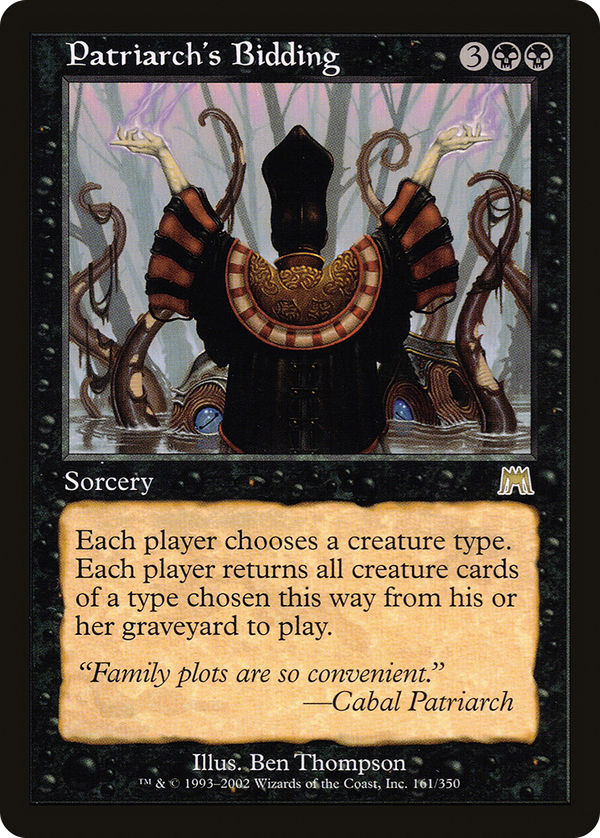
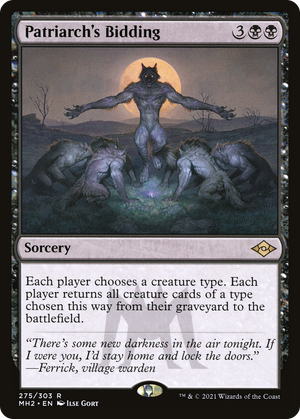
The shared-choice clause reads as fair and plays as lopsided, but the mechanism is subtler than a simple "everyone reanimates" gift. Every player names a creature type, and then every player returns all graveyard creatures of any type that anyone named. So if the table picks Goblins, Elves, and Zombies, every player who has Goblins in their yard gets them back regardless of who said the word. That collision is the real design tension: name your tribe to rebuild your board, and you may hand an opponent who shares it the same windfall. The spell belongs to the early tribal era that gave Magic its lord-heavy, creature-type-matters identity, and it answers a question single-target reanimation never could: how do you rebuild an entire board at once after a sweeper or a long attrition grind? The cost is that you cannot reanimate selectively or secretly. You get every creature of every chosen type from your own graveyard, which pushes the real decision into deckbuilding. Run a single clean tribe and the spell is a one-card army; splash a second creature type and half your yard sits dead unless someone else happens to name it. The discipline that pays for the power is tribal commitment: the deck that invested in one creature type before the game started is the deck this rewards, and the symmetry only ever becomes a gift to opponents who built the same way you did.