Pardic Swordsmith


Discarding at random is the tell: this is a discard outlet wearing a beater's clothes. The pump is almost beside the point, a single red for two power, and the randomness is the price you pay for repeatability. You do not choose what leaves your hand, so the swordsmith asks you to build a deck where no card hurts to lose: surplus lands in the late game, redundant burn, creatures you would just as soon see in the yard. That was the conversation this era of design wanted players to have. The format had made the graveyard a place worth filling, and a cheap repeatable self-discard outlet was the cleanest way to fill it under your own control. A 1/1 dwarf that chucks cards every turn for a marginal combat bonus is a clumsy package on its own terms, weak on both axes by intention. What it offers instead is a button: press it as many times as you have mana and cards to feed it, stacking the graveyard before your opponent gets there first. The combat math is the excuse; turning Threshold on, and making your other spells bigger, is the job. The body stays small and the discard stays random precisely so the card never becomes efficient at the thing it pretends to do, only good at the thing it is for.
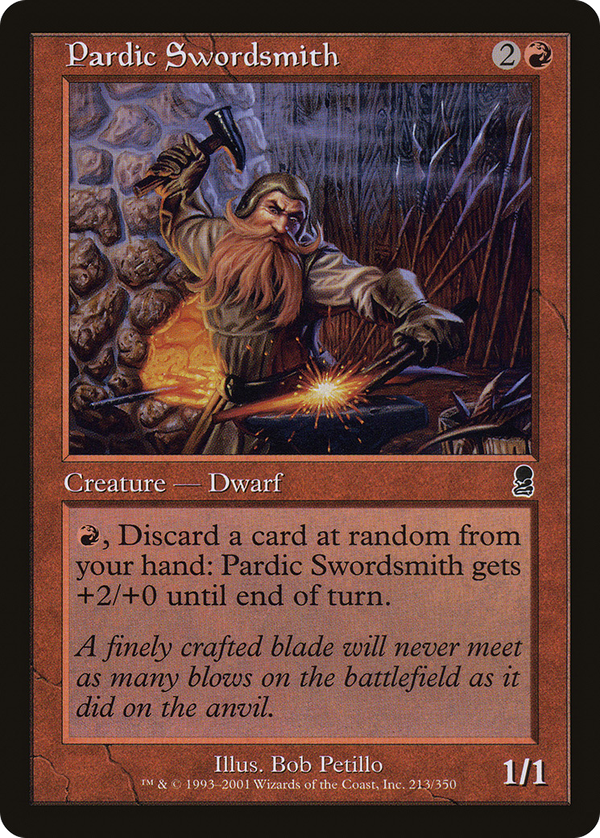
Rules text
, Discard a card at random: This creature gets +2/+0 until end of turn.