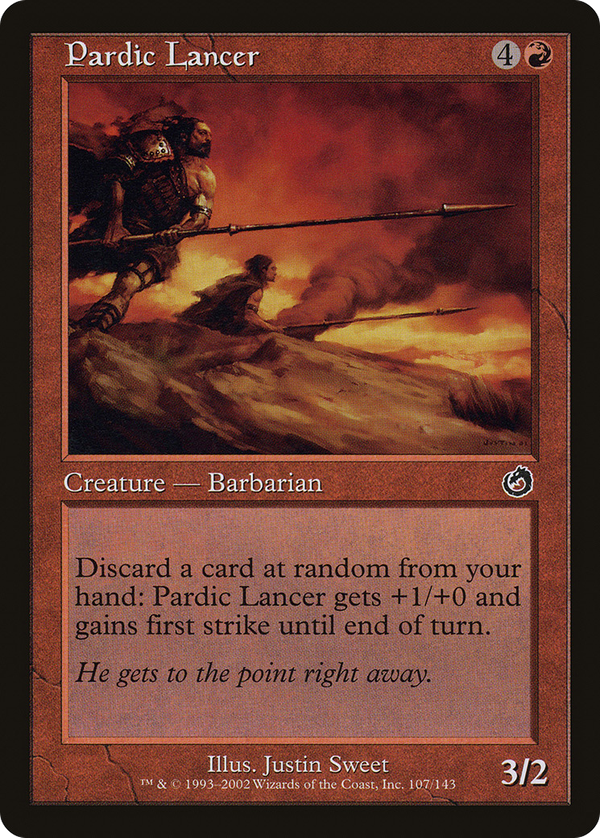
Pardic Lancer


Red's contribution to an era obsessed with a full graveyard and an empty hand: a pump paid for in cards, at random, with no ceiling on how many times you fire it. The random discard is what keeps the activation from being free value. You don't choose what goes, so each pump is a gamble against your own hand, and a 3/2 that needs several activations to matter can strip you faster than it closes a game. That design context is the only reason the random clause reads as upside rather than pure cost. The madness mechanic that surrounded this kind of card rewarded discarding at instant speed, and a repeatable, self-contained discard outlet bolted to a creature (the colon in the cost marks it as an activated ability, usable any number of times) is exactly the engine a madness deck wants: it turns the act of pitching cards into a way to cast them at a discount. On its own the rate is unremarkable for five mana, a fragile body buying first strike and a point of power per card thrown away. Read as a discard engine that happens to attack, it belongs to a larger conversation about making an emptying hand pay you back instead of bleeding you dry.