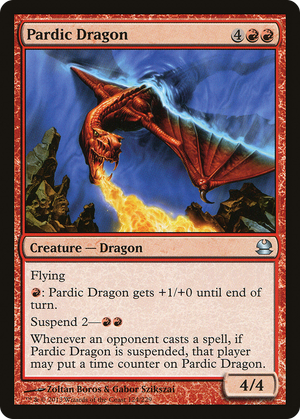
Pardic Dragon


Suspend gave designers a way to sell a cheaper rate against a clock, and most of the cycle locked that clock down: the cost was your turns waiting, and you knew exactly how many. This Dragon breaks the contract. The suspend cost is a steal for the body, but the last-counter rider hands your opponents a dial: every spell they cast is an invitation to add a time counter and push the release back. The decision sits with them, not you, which inverts the usual suspend math. You are not paying a fixed wait; you are paying an open-ended one that your opponents get to extend whenever it suits them, turn after turn. In practice the Dragon arrives when the table goes quiet, which is rarely when you want it. The hardcast line is the honest one: pay the full cost, get a flyer with a firebreathing pump that can swing combat or close a game, and skip the negotiation entirely. The design captures something specific about that era's experiments with shared timing: an effect whose tempo is co-authored by the player who least wants to author it. It is a deliberate piece of friction wearing the costume of a bargain, and reading the suspend line as a discount rather than a wager is exactly the trap it sets.
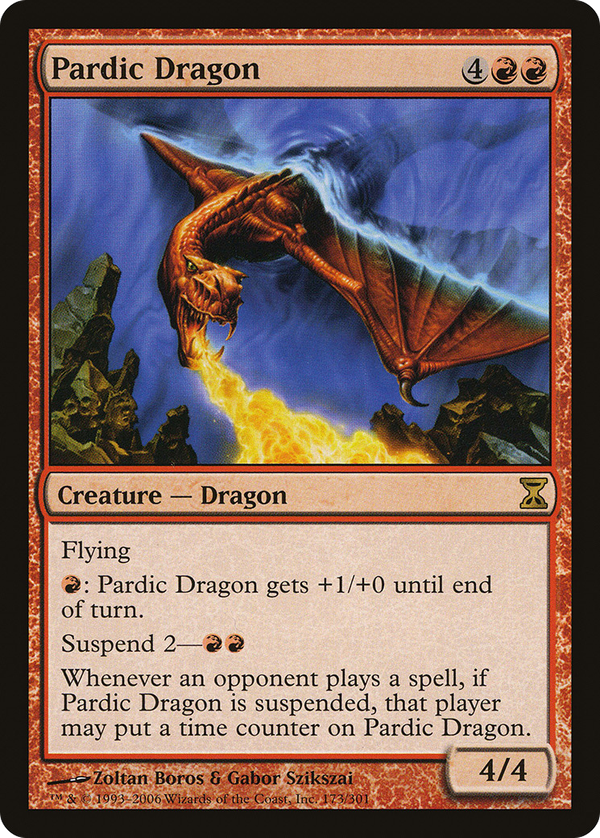
Rules text
: This creature gets +1/+0 until end of turn.
Suspend 2—
Whenever an opponent casts a spell, if this card is suspended, that player may put a time counter on this card.