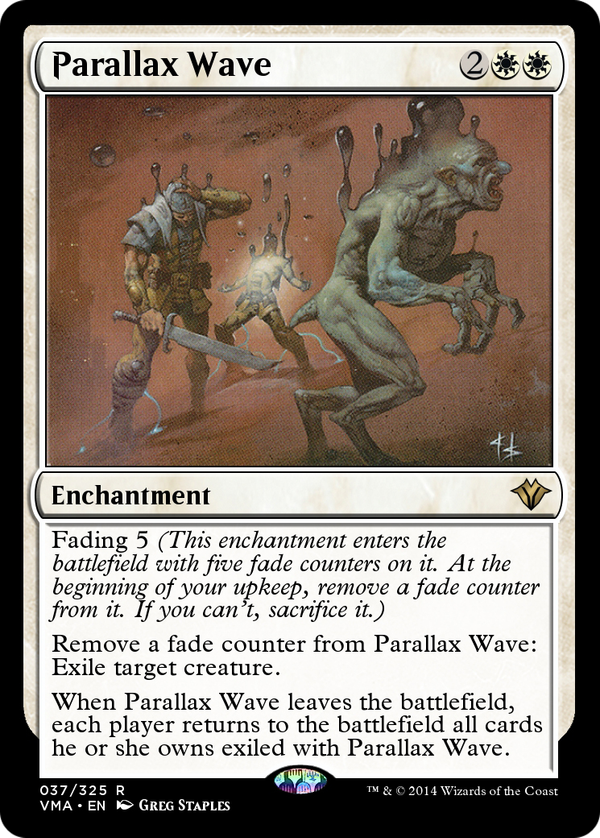
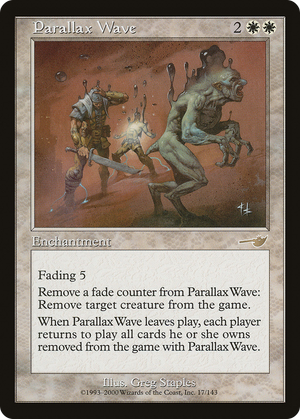
Parallax Wave


The genius here is the mismatch between the engine's clock and its leverage. Five fade counters each do double duty: they tick down on your upkeep whether you want them to or not, and each can be spent to exile a creature on demand. So the same resource that keeps the enchantment alive is the resource that clears the board, which means every removal you cash in shortens the fuse. Burn all five at once and the Wave evaporates on your next upkeep, handing back everything you exiled. That return-on-departure clause turns what looks like a stack of unconditional removal into a timed loan, and the friction is the whole point: win before the bill comes due, or find a way to make the enchantment leave the battlefield on your own terms.
That last condition is where the card stopped being a defensive sweeper and became a combo piece. Because the trigger returns creatures when the enchantment leaves, players learned to flicker the Wave or sacrifice it mid-counter to mass-blink their own board, retriggering enters-the-battlefield abilities. The sharper line exploits the timing of the leaves-the-battlefield trigger itself: activate all five exile abilities targeting an opponent's team, then, with those activations still on the stack, remove the Wave so its return trigger fires before the exiles resolve. The creatures get exiled with nothing left to bring them back. The fragility that balances the rate, a self-destruct timer baked into its only resource, is exactly the seam that build-around players have pried open ever since.