Palladia-Mors, the Ruiner




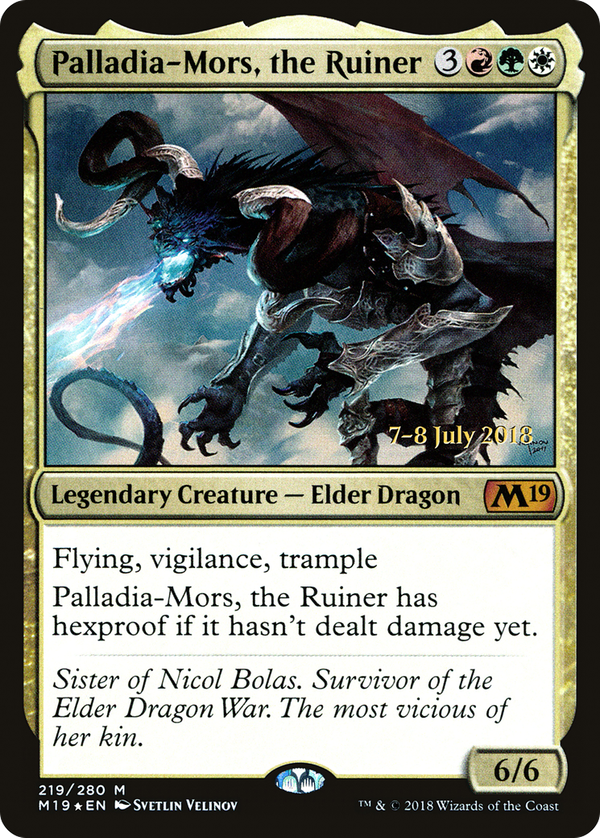
The conditional hexproof is the whole design conversation here, because it inverts how protection normally works on a large threat. A 6/6 flier with vigilance and trample is the kind of body that demands an answer the turn it lands, but the usual answer (a removal spell on the stack before it can attack) is exactly the window this Elder Dragon closes. It cannot be targeted by opponents until it has dealt damage at least once, which means the defending player has to let it connect before the spot-removal toolbox opens at all. The clause is self-limiting by design: the protection burns itself off the moment the dragon deals damage, so it rewards a tempo-positive board rather than a stall. What survives the hexproof are the answers that do not target: board wipes, edicts, and other non-targeted effects, while targeted removal, bounce, and single-target exile all bounce off until that first hit connects. As a member of the reimagined Elder Dragon cycle that gave each of the original five a new keyword identity, this is the one assigned to evasive beatdown across red, green, and white, the colors least equipped to recur a creature once it does eventually die. Vigilance is the quiet load-bearing piece: because the dragon does not have to choose between offense and defense, the hexproof window is easier to spend once it can attack without leaving you exposed, making the protection less a defensive shell and more a guarantee that the first hit lands.