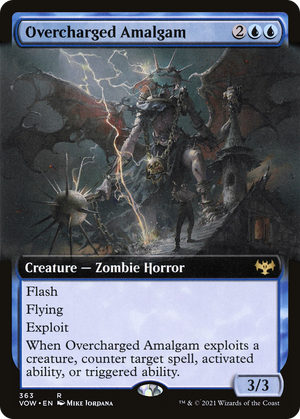
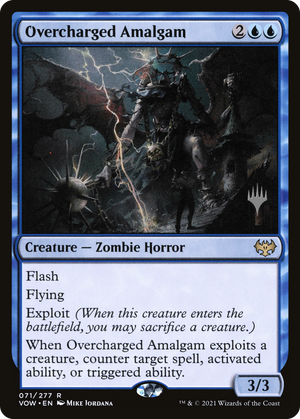
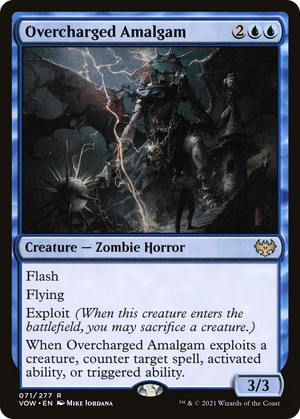
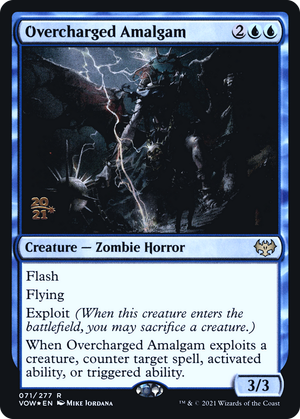
Overcharged Amalgam


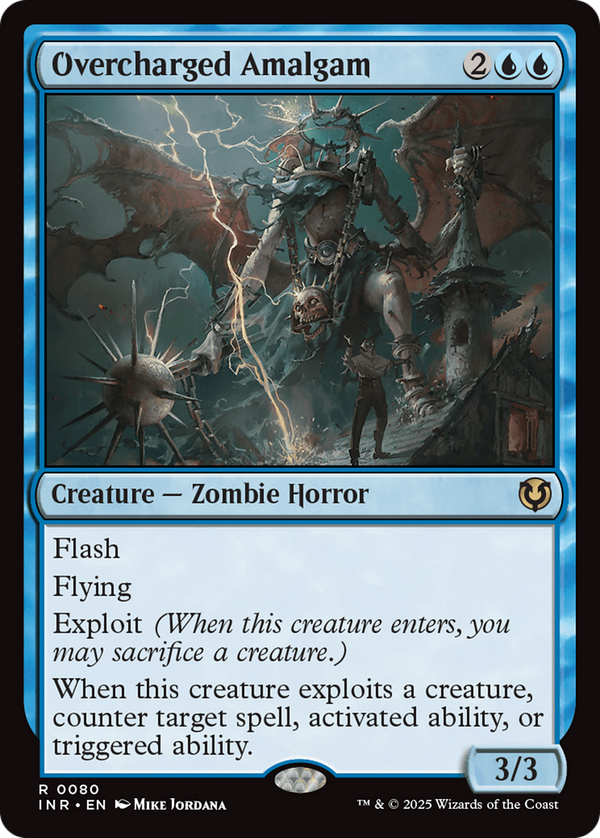
Folding a counterspell into an exploit body is a strange pairing, and the strangeness is the whole point: the sacrifice that fuels exploit is also the condition that fires the interaction. You hold up four mana with a spare creature on the battlefield, then flash this in over an opponent's spell, activated ability, or triggered ability, feed the exploit trigger, and answer whatever is on the stack while a 3/3 flier stays behind. That target clause is where the card earns its keep: countering a triggered or activated ability is rarer territory than countering a spell, so this catches things a straight spell-counter cannot reach. Flash is what makes the package coherent, because exploit only fires as the creature enters; without it, the counter would be stranded on your own turn and useless as reactive tech. The real design problem here is that a sacrifice engine wants fodder sitting in play while a control tool wants to hang back untapped, and this asks you to do both in the same motion, converting a spent creature into a two-for-one that trades a body for an answer and leaves a clock. The economy is genuinely different from a hard counter: you still pay the card and the mana, but you also pay a permanent, and in exchange the counter arrives stapled to a threat rather than fading into a used-up instant.