Otherworld Atlas
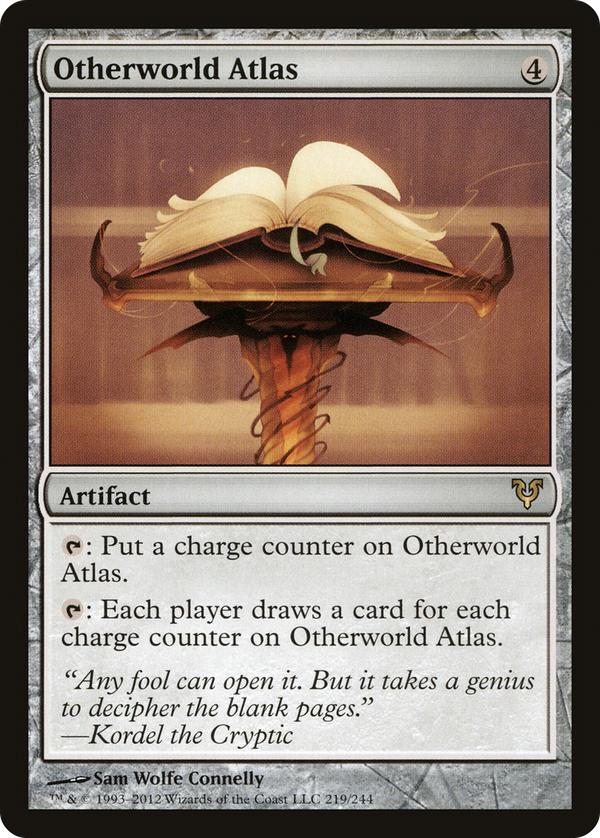
Symmetry is the entire wager. Both abilities cost a tap, so the two functions compete for the same turn: spend it charging and you bank a bigger future draw, spend it cashing and every player draws once per counter already accrued. That tension is the whole machine. The slowness is what keeps it fair, since counters only stack one per turn, and the engine has to survive several rotations of everyone's removal before the payout grows large enough to matter. And the payout it grows toward is shared: nothing on the card biases who benefits from the windfall it manufactures. Charge it and the table sees the wheel coming, which makes the Atlas less a private accelerant than a public negotiation. The reward for solving the math is a draw output that scales without bound; the price is that the same cards land in every opponent's hand on the way there, and nothing built into the artifact helps you spend them faster than the people you are feeding. A group-draw engine wants a pilot who can break the parity it enforces from elsewhere: a way to deny opponents their share, a payoff for overdrawing that others cannot match, a reason the symmetry tips before anyone else cashes in. The Atlas manufactures the resource and hands you the harder problem of keeping it for yourself.
Rules text
 : Put a charge counter on this artifact.
: Each player draws a card for each charge counter on this artifact.
: Put a charge counter on this artifact.
: Each player draws a card for each charge counter on this artifact.