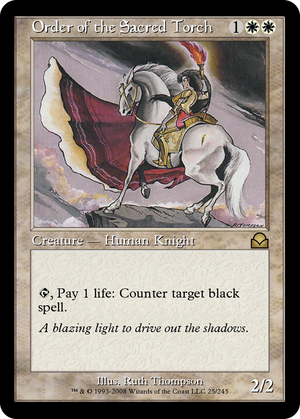
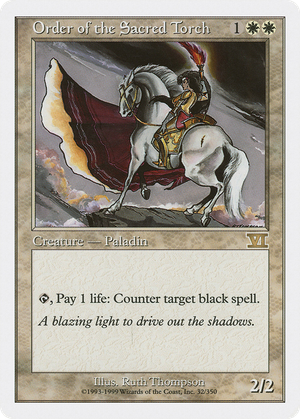
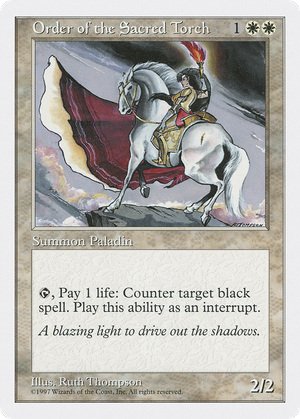
Order of the Sacred Torch


Color hate worn as a body rather than tucked into a sideboard slot: the 2/2 Knight asks no part of your opening play, just stations itself in your zone and offers to counter one black spell per turn for a tap and a point of life. The repeatable, taxed cost is what keeps the lock from being a free permanent shield. Counterspelling is normally a single transaction, so binding it to a creature that has to survive and untap turns "I counter your spell" into "I counter your spell, once, if you can't kill my 2/2 first." That asymmetry runs the wrong way against the very decks the card was built to punish, since black holds exactly the removal needed to break the lock before the tap ability ever matters. The mono-colored guard stationed against a single enemy color was a recurring template through this era, and the Knight reads as much like a flavor statement (an order sworn against black mana) as a competitive tool. Stapling narrow hate to a fragile body is why designs like this faded: the body tends to die before the hate accrues value against the one deck it was printed to answer.
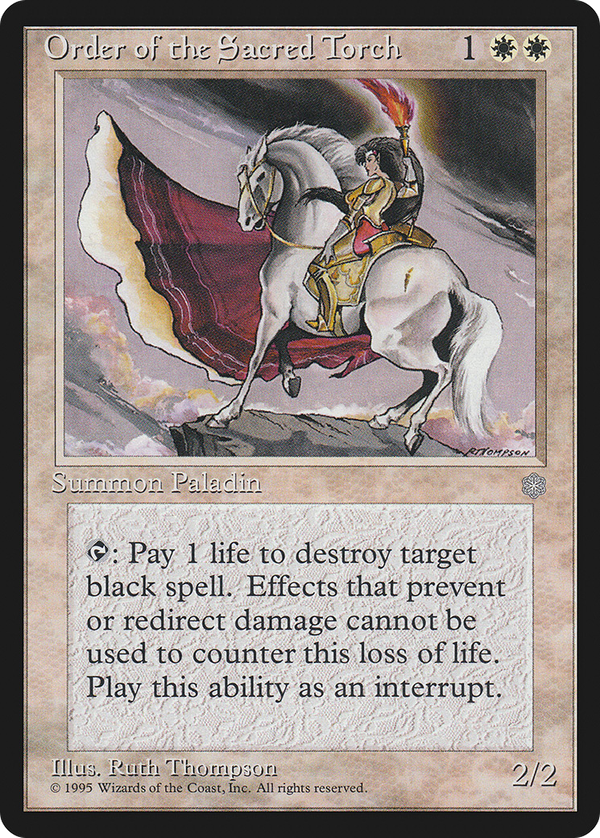
Rules text
 , Pay 1 life: Counter target black spell.