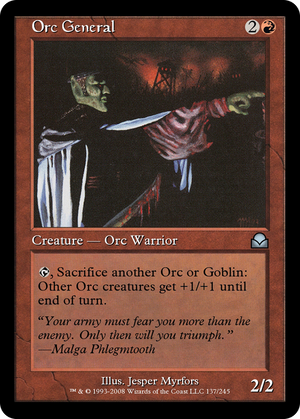
Orc General


The tap symbol in the cost does more work than it looks: this is a once-per-turn engine, not a sacrifice loop, so the whole transaction is a single body traded for a single team-wide point. Two structural frictions undercut even that modest rate. The buff names Orc creatures specifically, so the Goblins you sacrifice never benefit, and the pump excludes the General itself; you shrink your own count to swell what remains, then wait a full turn cycle to do it again. There is no closing engine attached: no recurring fodder, no death payoff, just the one-for-one trade gated behind tapping. The design predates the modern aristocrat vocabulary, where a sacrifice cost is the input to a value engine (a drain trigger, a token generator, a recursion loop) rather than the whole effect. Here the cost is the effect, and the effect is fragile: one combat trick or removal spell on the wrong creature erases the turn's work. What the card documents is an early attempt to model a warlord's gambit in mechanical terms, the commander who spends a soldier to make the rest fight harder. The fiction is legible; the math rarely pays for the body.
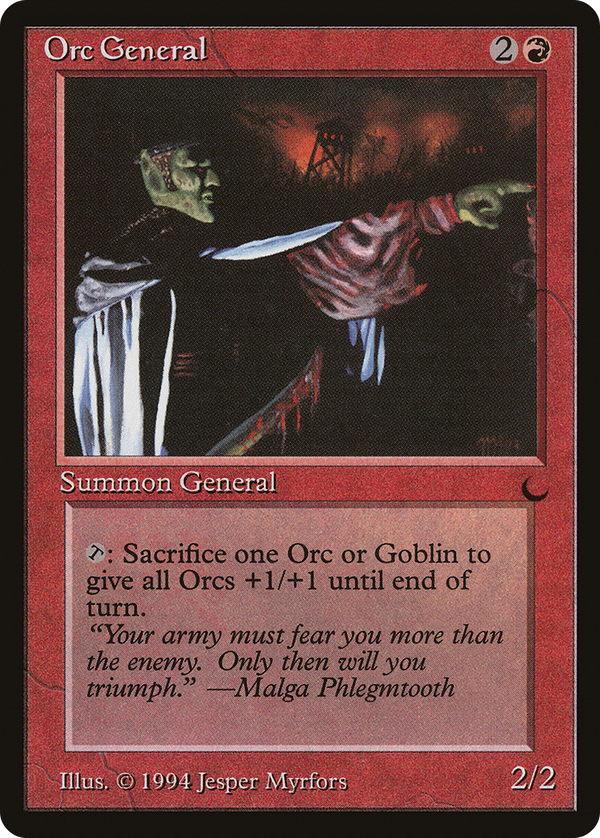
Rules text
 , Sacrifice another Orc or Goblin: Other Orc creatures get +1/+1 until end of turn.