Oracle of Dust


A 3/5 body that wants nothing to do with combat is the first clue: this is a grinder, built to sit on defense while a slow engine chips value across many turns. The activated ability is the point, and it comes with a precondition that shapes everything about how the card plays. You cannot fire it until something an opponent owns is already sitting in exile, which means the creature is inert on its own until an ingester or an exile-based removal spell has done the setup work first. That is the whole texture of the card. This was one half of a two-piece machine, useless without a front end feeding the exile pile. Once the pile exists, two mana per activation loots (draw, then discard) while sliding the opponent's exiled card back into their graveyard, usually a non-issue and occasionally a genuine gift to a reanimation deck. It reads as a cautionary study in conditional design: hanging an ability off a board state your own deck has to manufacture is a heavy tax to lay on a five-mana creature, and the whole idea of processing exile largely never traveled far from where it started. What survives is a clean artifact of an early-era attempt to make exile a resource that could be spent twice rather than a one-way door.
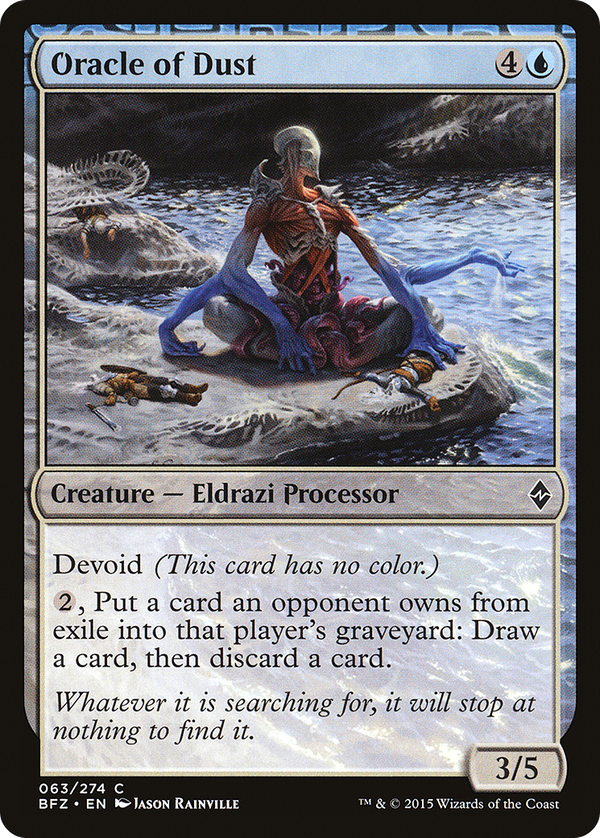
Rules text
 , Put a card an opponent owns from exile into that player's graveyard: Draw a card, then discard a card.