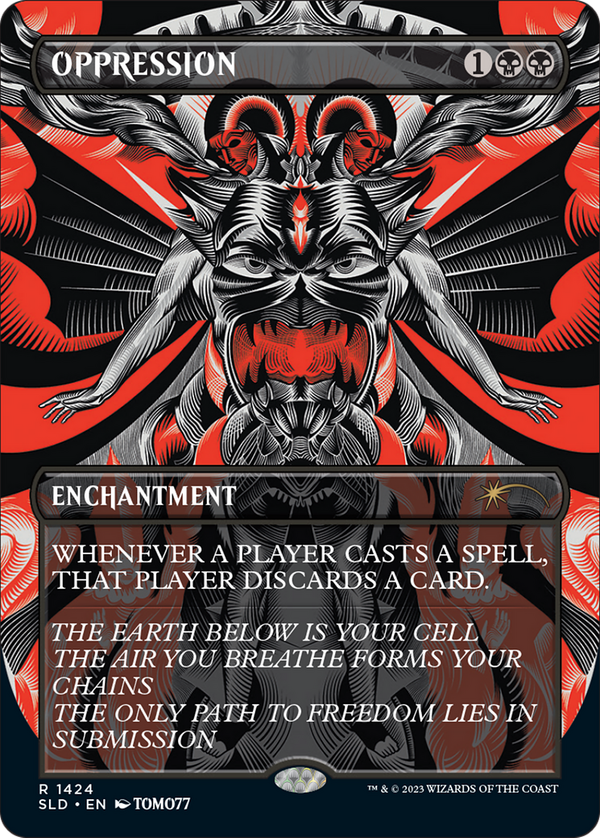
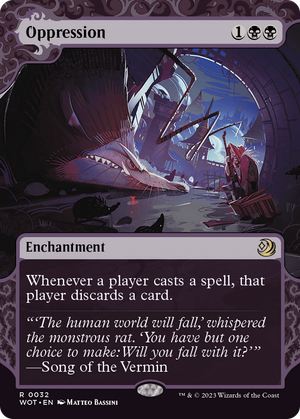
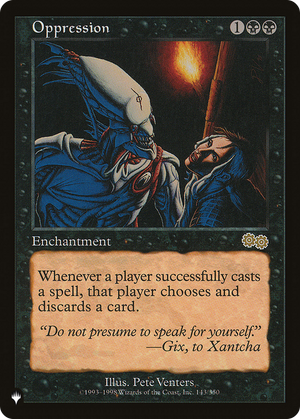
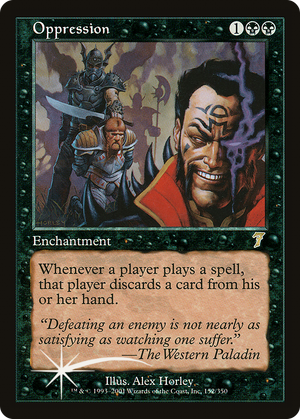
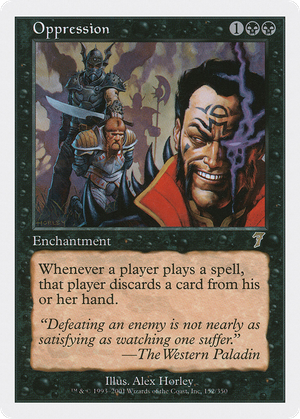
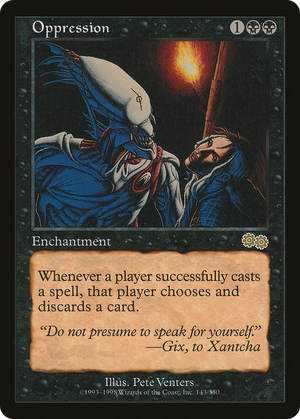
Oppression


The symmetry here is the whole trick, and it only ever points one direction. On paper this taxes both players equally: anyone who casts a spell pays a card from hand. In practice it is built to be broken by the player who empties their own hand first, then sits behind an enchantment that punishes every refill the opponent attempts. The classic shell pairs it with a one-sided discard engine: cast your spells fast, dump your hand on purpose, and turn Oppression into a soft lock where the opponent cannot deploy a single threat without paying for it twice. It is prison-by-disadvantage rather than prison-by-prohibition; nothing is forbidden, everything just costs an extra card, and against a player who has already gone to zero cards the cost falls only on the side that still has resources to spend. That design lineage runs through black's hand-attack tradition: where Hymn to Tourach strips two cards once, Oppression installs a recurring tax that scales with how badly the opponent wants to play the game. What makes the lock leak is the same clause that makes it brutal: it fires on cast, not on resolution, so it cannot stop a spell, only bleed the hand around it. That timing is why it grinds down midrange and folds against a deck that wins by topdecking from an empty hand.