Onulet

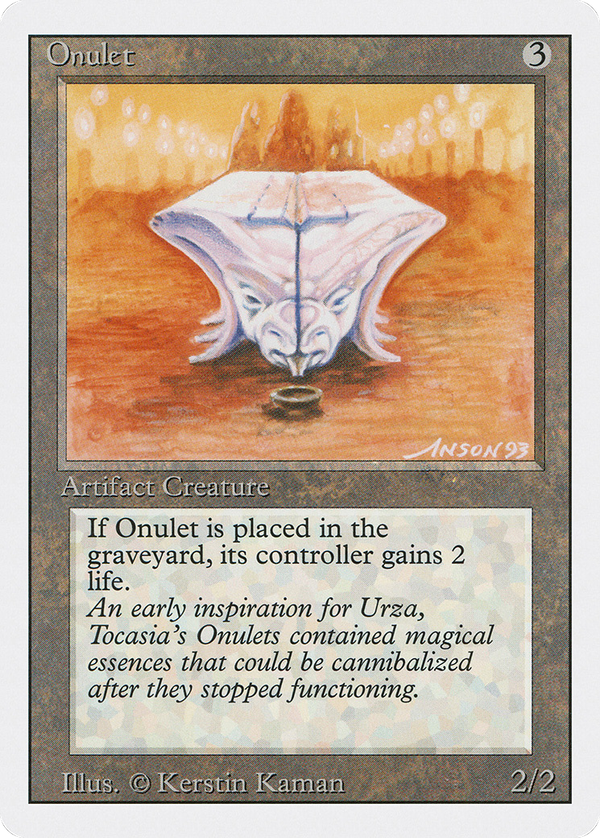
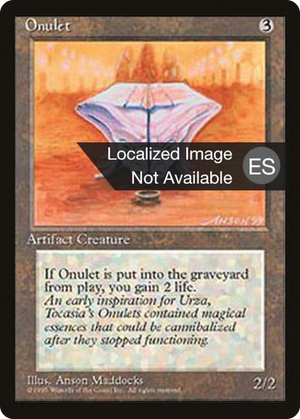
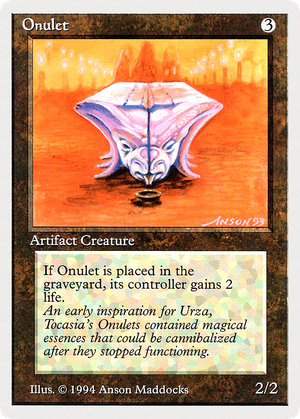
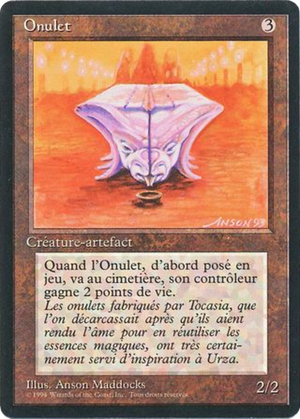
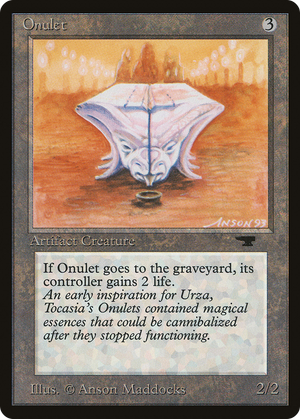
Early Magic priced bodies and abilities together in a single number, and this colorless 2/2 with two life stapled to its death is that math made literal. In 1994 a vanilla 2/2 cost two mana in colors; the colorless frame paid a tax of one more, and whatever value a creature carried (a death trigger, an enters ability, a tap effect) came out of the rate rather than as a discount. The life gain here is the compensation for running a creature outside your colors, and it sits comfortably inside the era's life-as-resource economy, where players paid life for power and speed off cards like Mana Vault. A slow deck got a construct that traded into burn and still walked away two life ahead. The body has aged out of relevance because the floor on artifact creatures has climbed: a colorless 2/2 with a minor death trigger is now common-rarity filler with extra text, and the bare 2/2-for-three feels punitive. As a clean specimen of how this period valued the artifact-color tradeoff, though, it reads honestly. The four-legged automaton in the art is a small visual forerunner of the construct walkers Urza's block would later make a signature; the creature is forgettable, the design logic behind its rate is not.