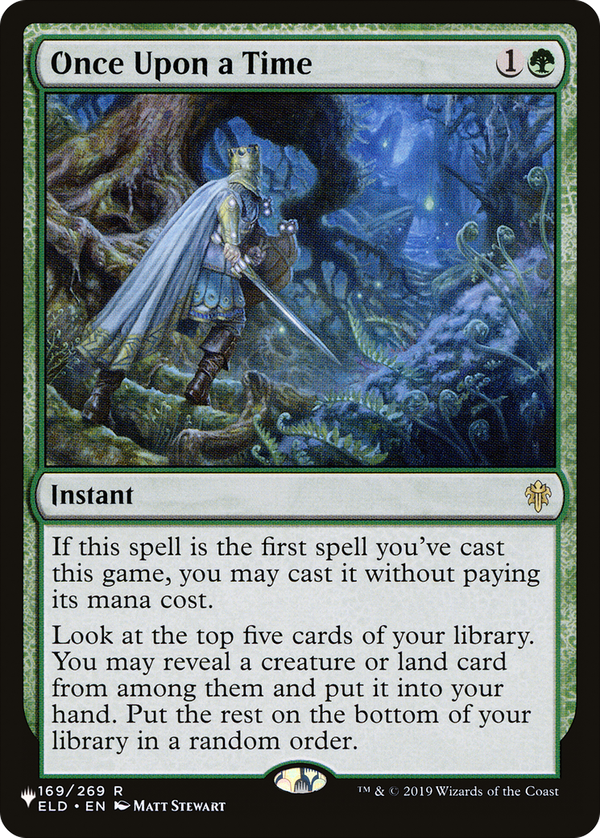
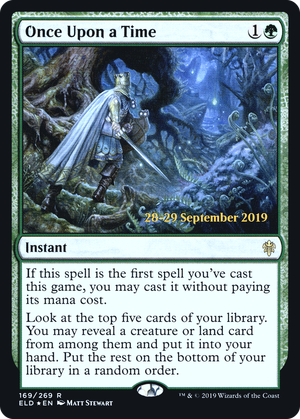
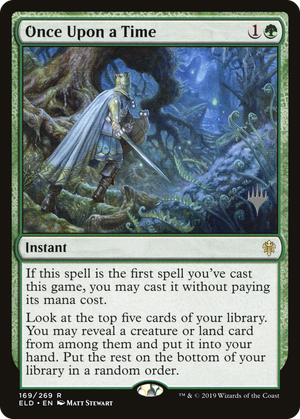
Once Upon a Time


The trap is the free-cast clause, not the card selection. Read the second paragraph alone and this is a modest green cantrip: dig five, take a creature or a land, bottom the rest. At its printed two mana it would have lived and died as filler, a fine-enough dig any green deck could run to find a threat or a missing land drop. The first line rewrites the math. Cast before you have committed any spell of your own to the game, it costs no mana at all, converting a keepable-but-clunky opener into the piece it was short on: the effect is card-neutral (you trade the card in hand for a card from the top five), but the mana line is zero. Note the fence is not "the stack is empty" or "nothing has happened yet"; opponents can have cast and resolved things, and this stays free so long as it is the first spell you have cast this game. That single condition is the entire brake, and free spells are among the most dangerous things a designer can print, because a card that can cost nothing warps every deck-building calculation around it. The banning that followed is the clearest verdict a designer can receive: a consistency piece free often enough to run in every deck of its color stops being a choice and becomes a tax. What remains is a study in how thin the margin is between "smooths your draws" and "every green deck plays it."