Ominous Harvest


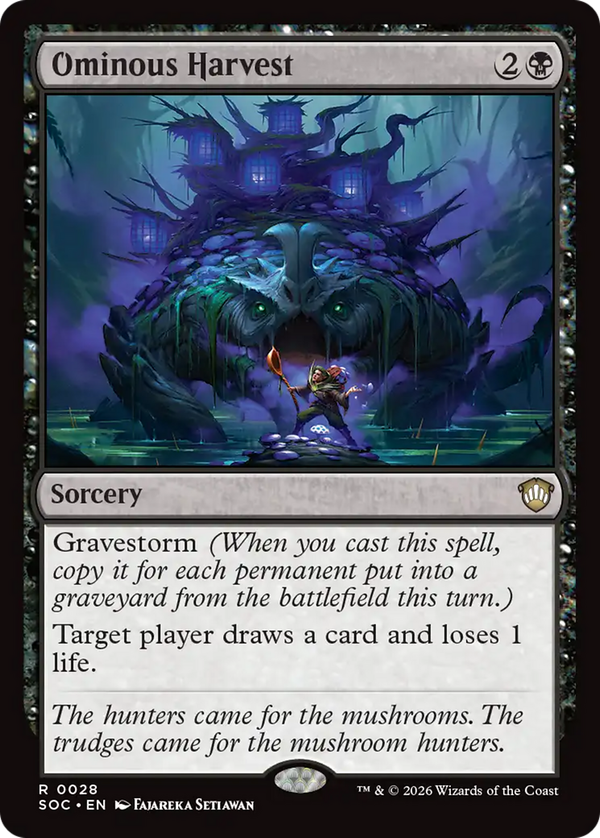
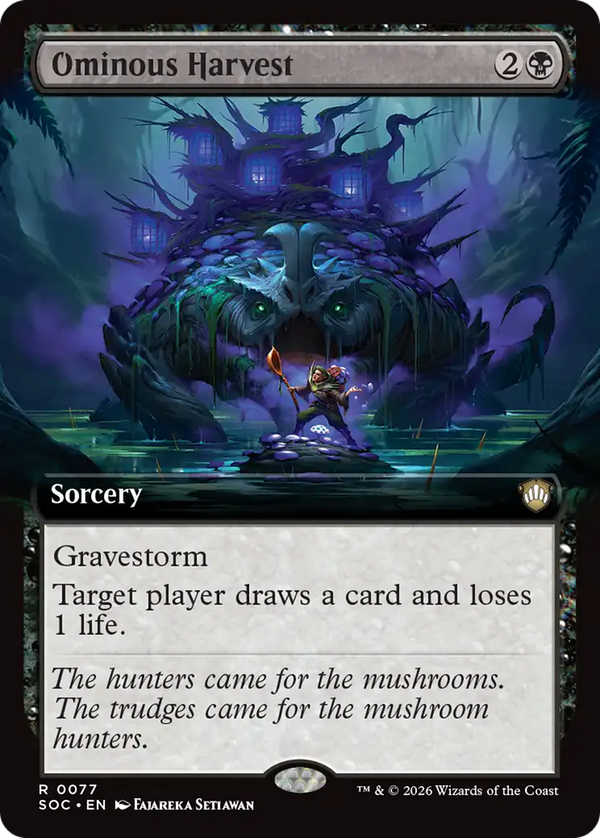
Storm has almost always been a spell-count mechanic, tallying the cards you cast this turn; gravestorm relocates the trigger to count permanents that hit a graveyard from the battlefield instead. That relocation changes the deck the mechanic asks for. Ordinary storm wants a critical mass of rituals and cheap cantrips to build the count on the stack; gravestorm wants a board and a way to empty it (a sacrifice outlet, a wrath, a wide token turn followed by a mass sacrifice). The count lives in the graveyard rather than the storm zone, so the same effect that clears your battlefield of chaff becomes the payoff engine. Attach that trigger to a draw-and-drain effect and every dead permanent stacks another copy: one more card drawn, one more point of life lost. The freedom here is in the targeting. Because each copy chooses a player independently, a big gravestorm turn is not a self-directed gamble but a distribution problem: bury an opponent under forced draws until their library runs out, split the drain across the table, or split the difference and refill your own hand while burning someone else. The base effect is deliberately small, a strictly-worse cantrip on its own; the whole card is a bet you have already engineered a graveyard-flooding turn before you cast it. Gravestorm remains rare enough as a keyword that each payoff built around it is a centerpiece rather than a role-player.