Omashu City
The two-color tapland that converts a dead draw into a live one late, when the mana it produces has stopped mattering: this is the Gruul entry in a design lineage stretching back to the earliest dual lands built to soften their own late-game deadweight. The tempo cost is paid up front, entering tapped so the early turns feel the drag, and the payoff is deferred to a point where an untapped-but-useless land is exactly the resource you want to turn into a fresh card. The activation is deliberately expensive: four generic plus the tap plus the sacrifice means you are not doing this on turn five, you are doing it when you have flooded and the game has gone long. That deferral is what keeps the design in check. A land that draws too cheaply distorts every deck it touches; pricing the draw at five total mana and a permanent land holds it to flood insurance rather than a value engine. The structural ancestor is the cycling land, which trades the same drawback (a land that cannot pay for itself immediately) for the same reward (a card when you would rather not have drawn a land), though here the exchange happens on the battlefield rather than from hand. That difference matters: it survives a shuffle and can sit in play as a standing threat of card advantage across multiple turns, a resource the opponent has to account for rather than one spent the moment it is drawn.
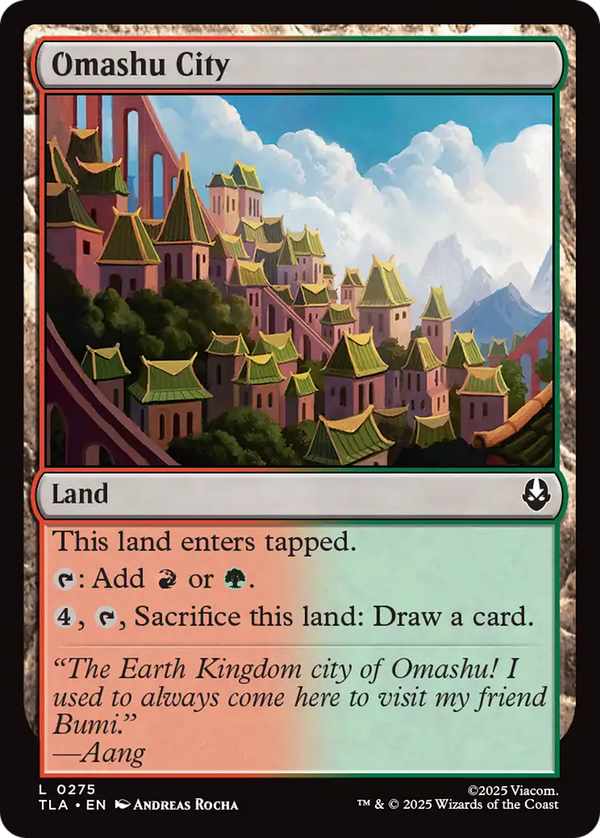
Rules text
 : Add
: Add  or
or  .
.
 , , Sacrifice this land: Draw a card.