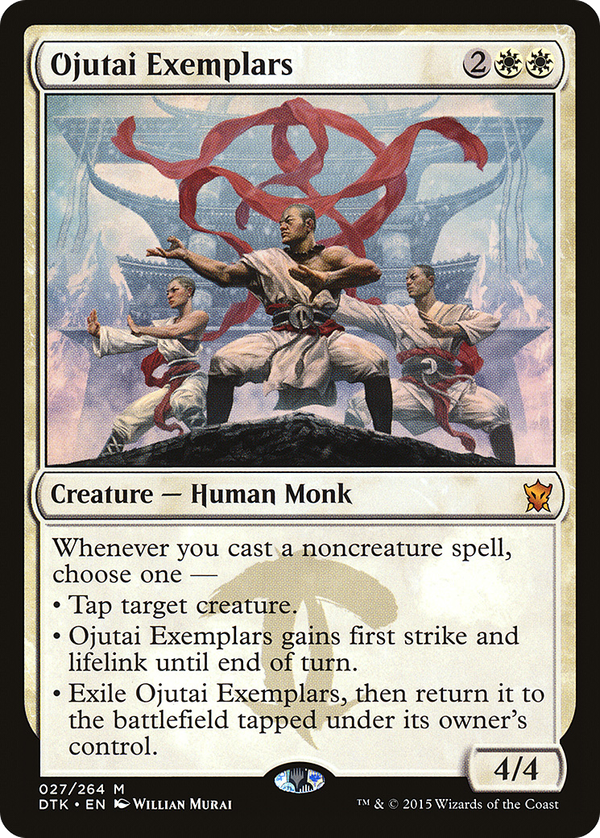
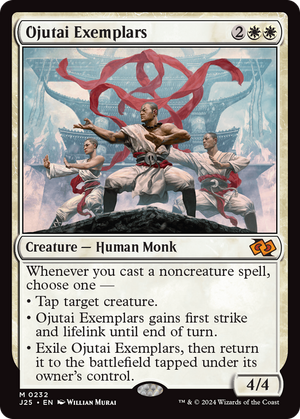
Ojutai Exemplars


Every noncreature spell you cast becomes a fork in the road: tap something down, suit up with first strike and lifelink, or blink the body. The third mode is where the design actually lives, and it is more conditional than it reads. Because the exile-and-return resolves immediately when the triggered ability resolves, it is not a stack trick that saves the creature from a sweeper: respond to a board wipe with an instant, and the Exemplars exiles and comes back before the wipe resolves, only to be caught by it anyway. What the blink reliably does is dodge single-target removal by removing the object the spell was aimed at, so a point-and-kill answer fizzles against nothing. It does not answer tappers or beat summoning sickness, though; the creature returns tapped and, as a new object, would still be sick if it needed to attack that turn. The real engine is the cadence: each of the three modes keys off spells you were already casting, so a deck dense with cheap noncreature spells turns one 4/4 into a recurring source of tempo and reach. That flexibility comes with an inert body attached. With no native evasion and no triggers outside the spells that feed it, a turn without a spell leaves it a plain 4/4 that trades down or stalls. It belongs to the strand of white aggression that treated noncreature spells as the connective tissue of a board, building around a single threat resilient enough to be worth protecting.