Obzedat, Ghost Council



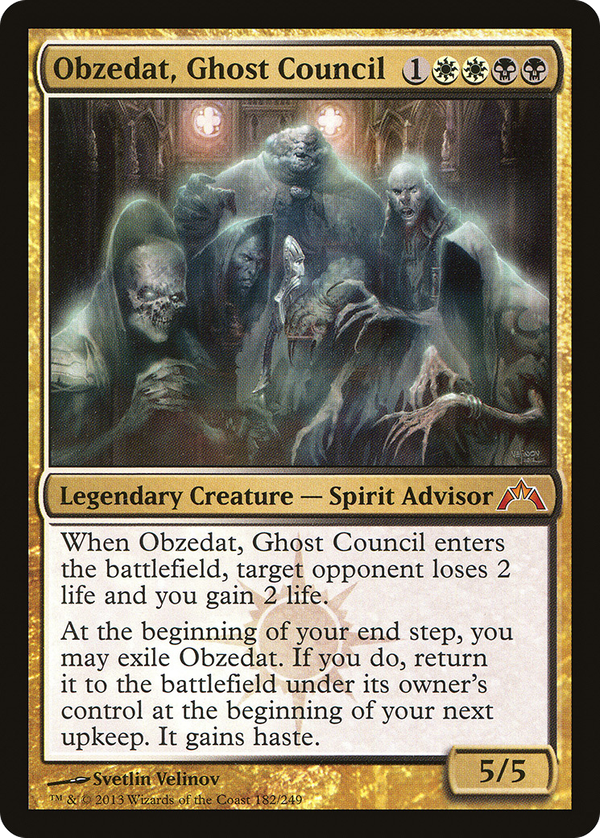
The end-step exile clause is the whole engine, and it is built to defeat the answers that would otherwise eat a five-mana body. Because the exile triggers at the beginning of your end step (after combat is over), the council attacks normally and then vanishes before you pass the turn: it dodges sorcery-speed removal entirely, slides under board wipes, and leaves nothing on the battlefield for an opponent to point destruction at during their own turn. The drain on re-entry is the payoff, since the upkeep return retriggers the enters-the-battlefield clause, swinging the life total four points every cycle while the card itself can only be answered during the narrow stretch of your turn when it is actually present. Returning with haste closes the loop, so the body is a threat the instant it reappears rather than a creature waiting out summoning sickness. What distinguishes this design among grindy black-white midrange finishers is that the protection and the clock are the same mechanic: you are not trading tempo to keep it safe, you are gaining life and pressuring theirs precisely by hiding it. The cost is real, though. The exile is optional but binding for a full turn cycle, so a defensively flickered Obzedat is also an absent blocker on your opponent's turn. It rewards a player willing to think in turn-cycles rather than turns, and it punishes removal-reliant decks by simply never being there when the removal is.