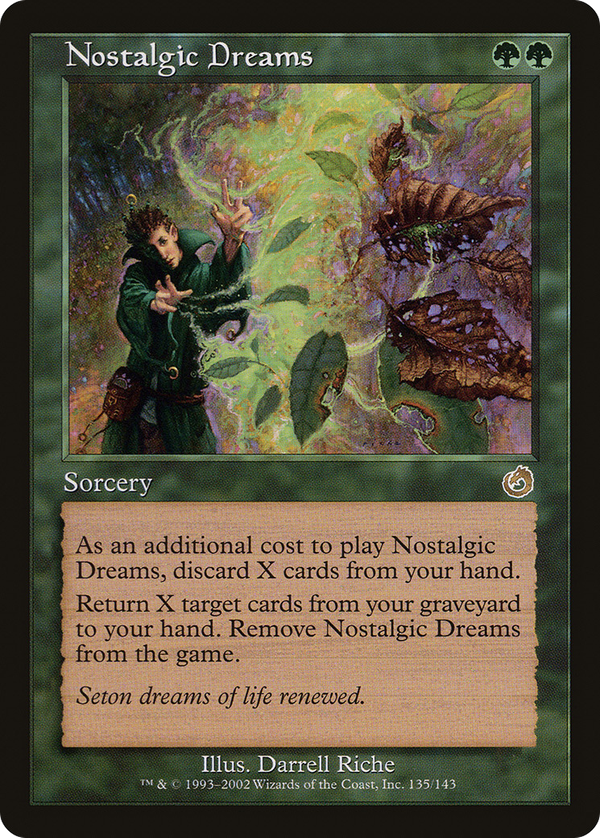
Nostalgic Dreams

The trade is strictly one for one in card count: discard X, return X, no more and no less. The appeal is conversion rather than accumulation. The discard half lets you shed the chaff your hand is choking on (flooded lands, dead situational cards, surplus copies) while the return half pulls back the spells you actually want: the burn you already cast, the threat that died, the answer in the bin. You pay for the good cards with the bad ones, and the exchange happens in a single overloaded turn. That dual function is why graveyard-centric green wants it, since the same cast both feeds the bin and cashes it back out. The self-exile clause is the ceiling that keeps it from being an engine. Green recursion has historically run through one-card-at-a-time effects in the Regrowth tradition, many of them retrievable and replayable themselves; this one returns a fistful at once but cannot be looped, so you get one explosive payoff and then it is gone. That cap is deliberate. A multi-card regrowth that could be reused would warp any graveyard deck around it, so the design front-loads the entire reward into a single cast and walks away. The result is an unusual green regrowth that scales with how badly your own hand has gone stale: the worse your draws, the more grip you have to exchange, and the bigger the swing when you finally empty the pile.