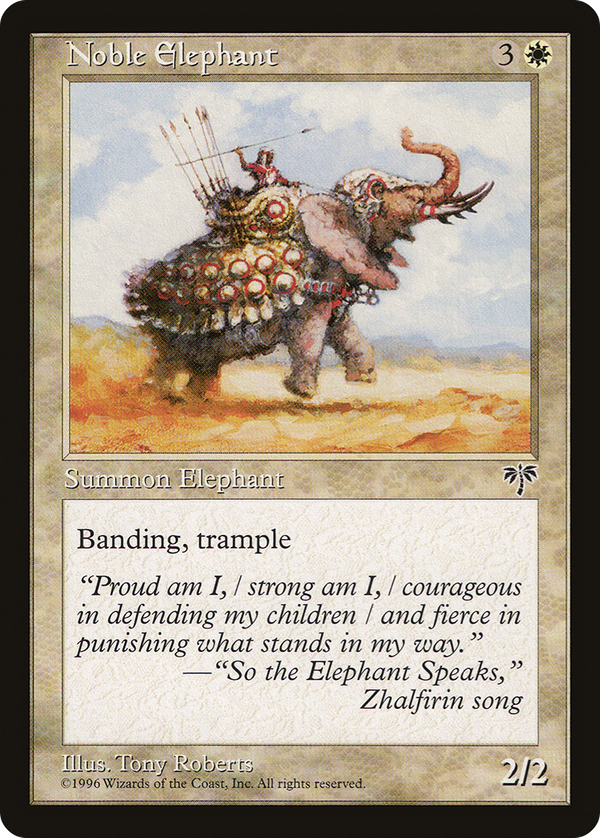
Noble Elephant


Banding is the most baroque combat mechanic the game ever shipped, a rules thicket so dense that Wizards stopped printing new banding creatures and folded the keyword into the "ante and forgotten mechanics" pile. The interesting thing here is the pairing. Trample wants combat damage to spill past a blocker; banding lets the attacking band's controller assign the blocker's damage rather than its owner. Stack the two and you get a creature that, blocked, can shrug the incoming damage onto a different member of its band while still pushing trample damage through, an attacker that effectively rewrites both sides of the damage-assignment step in its own favor. That is a lot of rules text for a 2/2 body at four mana, and the rate was never the point: banding cards were always priced for the headache they impose on the opponent, not for their stats. Reading the reminder text alone is a rite of passage, and the interactions only deepen on defense, where a banding blocker lets you soak up an attacker's damage across multiple creatures you control. It belongs to a specific historical moment when the design language still trusted players to parse a paragraph of combat exceptions printed on a common. The keyword's complexity is exactly why it never returned, which makes any banding creature less a card than an artifact of how the game used to talk to its players.