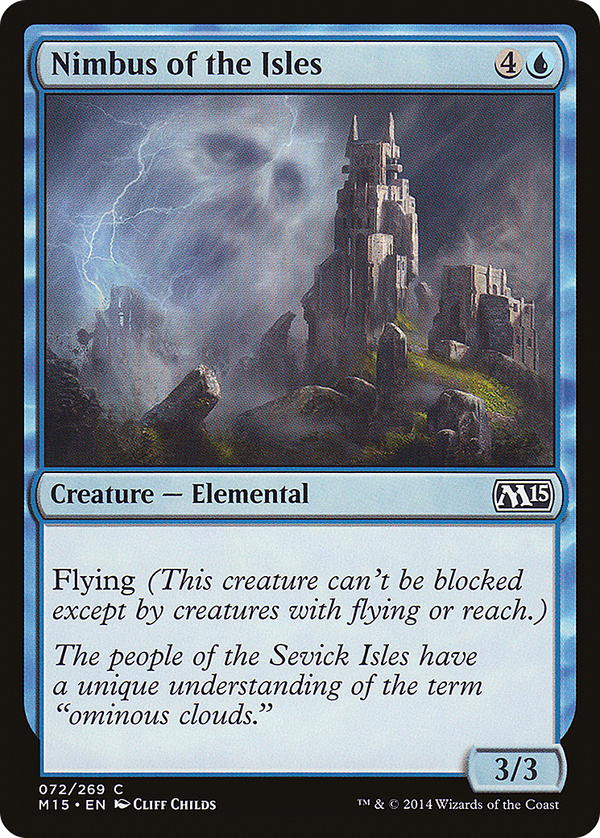
Nimbus of the Isles


A 3/3 flyer at five mana with nothing following the evasion is the near-vanilla body in one of its plainest forms: a single keyword, no trigger to track, no clause to misplay, the same combat math every turn. The design job is ballast. Common-rarity slates need a predictable amount of air, creatures that hold the skies and pressure an opponent overhead without asking the player to read past the reminder text, and this fills that structural hole exactly. The undersized rate relative to cost is the tell that efficiency was never the point; the card is not competing against sharper evasion so much as guaranteeing a floor of it, a dependable flyer that keeps the air war from coming down to whoever happened to open the good uncommon. What it concedes in cost-efficiency it returns as zero cognitive load: the entire decision tree is whether it flies, whether it blocks the thing coming at you, and whether it trades. Cards built this way are why a set's common flyers feel balanced rather than random, the quiet fixtures that shape a curve without ever demanding attention.