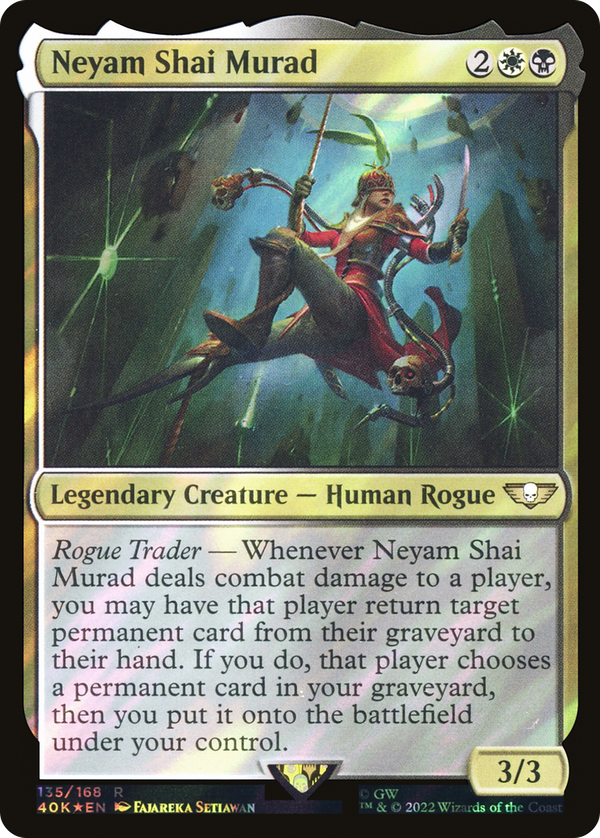
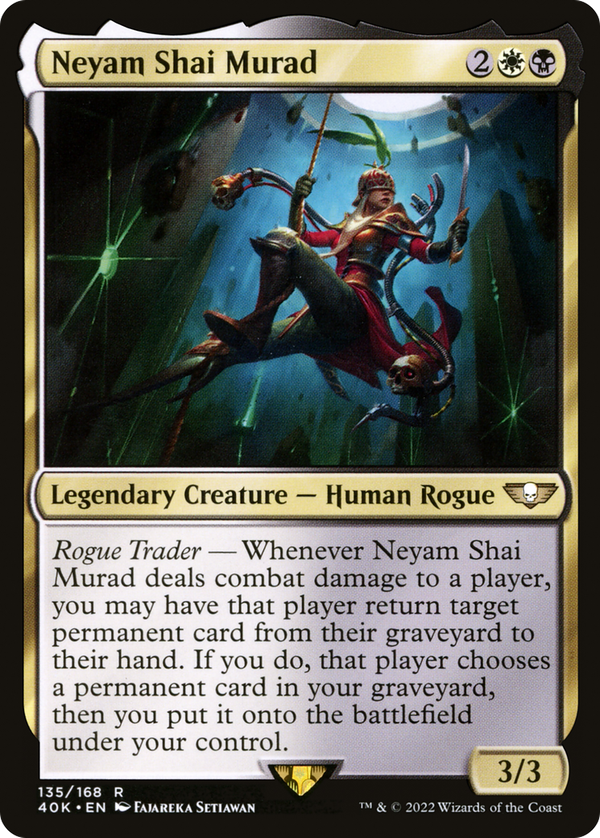
Neyam Shai Murad



Symmetry weaponized. The combat trigger looks like a gift to the defending player: they get a permanent back from their own graveyard, a genuine card-advantage swing in their favor. That handoff is the price, and it is deliberately made attractive, because it activates the second clause. Once the player returns something, they must reach into your graveyard and hand you a permanent, which enters the battlefield under your control. You are trading them a card in hand for a card in play, and the difference between "in hand" and "on the battlefield" is the entire point: reanimation without a reanimation spell, paid for by your opponent, triggered by a swing from a modestly-sized 3/3. Getting a body that small to connect is the design problem the reward has to answer for, so stocking your own graveyard with the game's most expensive permanents turns each hit into a heist. It also inverts the usual reanimator sequencing, where you dump a haymaker and then spend a card to bring it back; here the graveyard is the deck's engine and the opponent is the trigger you never had to cast. The effect is technically symmetric in wording and lopsided in practice, which is the most honest kind of design: it lets the opponent feel they came out ahead on cards while you walk away with the board.