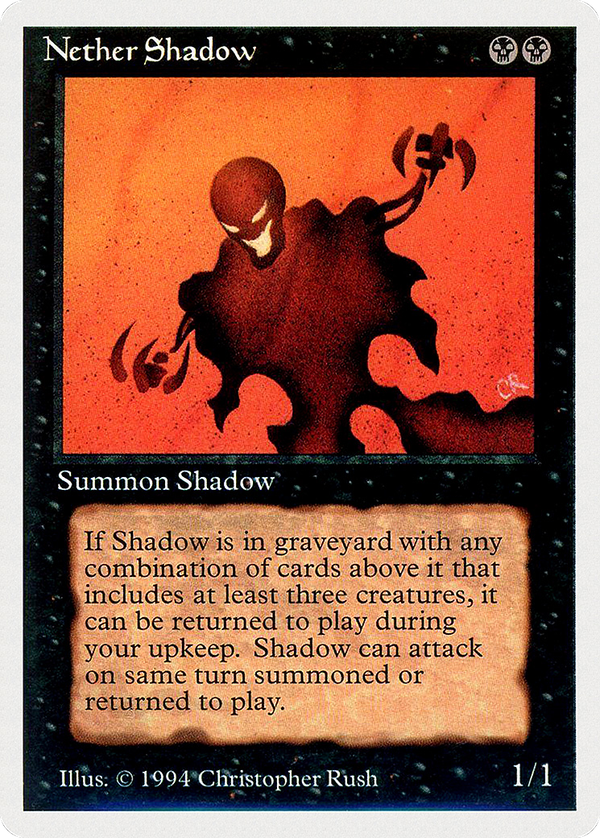
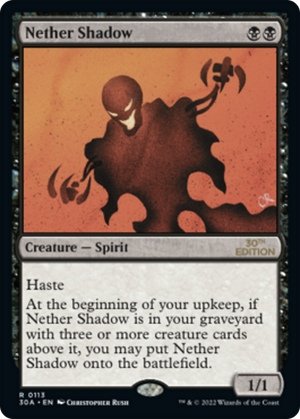
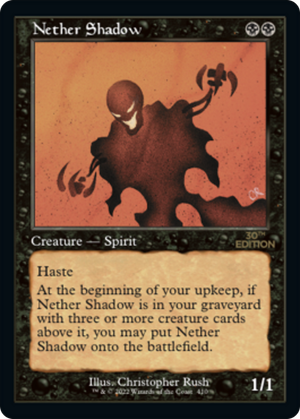
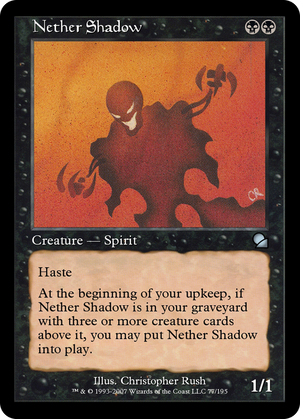
Nether Shadow

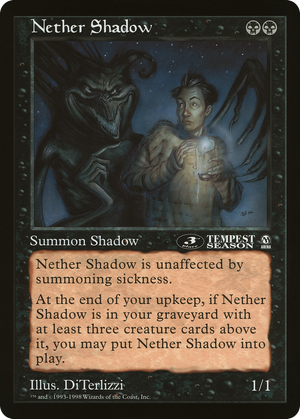
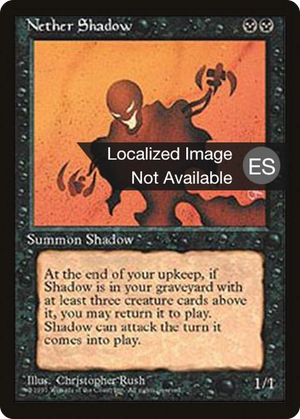
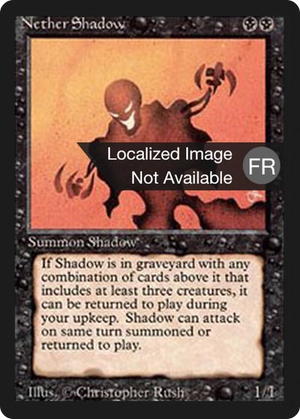
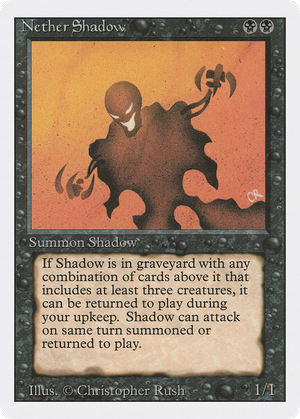
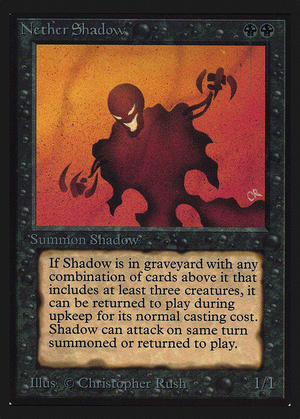
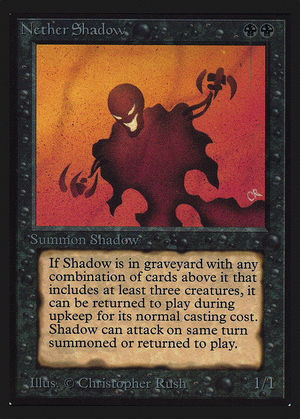
The upkeep trigger asks a question recursion design has wrestled with ever since: can a creature come back without making the loop trivial? The answer here is positional. Three creature cards have to be above it in the graveyard, which in 1993 meant tracking the exact order cards were milled, killed, and discarded into the pile. The card encodes graveyard order as a resource, something modern templating has mostly walked away from in favor of cleaner conditions (sacrifice a creature, pay life, exile something else). Haste closes the loop: when the Shadow returns, it attacks immediately, turning the graveyard into a tempo engine rather than a slow value pile. The lineage runs through Bloodghast, Gravecrawler, and Reassembling Skeleton, but those cards all simplified the return condition into something a judge does not have to adjudicate. Nether Shadow is the prototype that still required players to physically stack their graveyard in chronological order, and the rules complexity is exactly why later designers abandoned positional graveyard triggers. A genuine fossil: the recursion concept that worked, with the bookkeeping that did not.