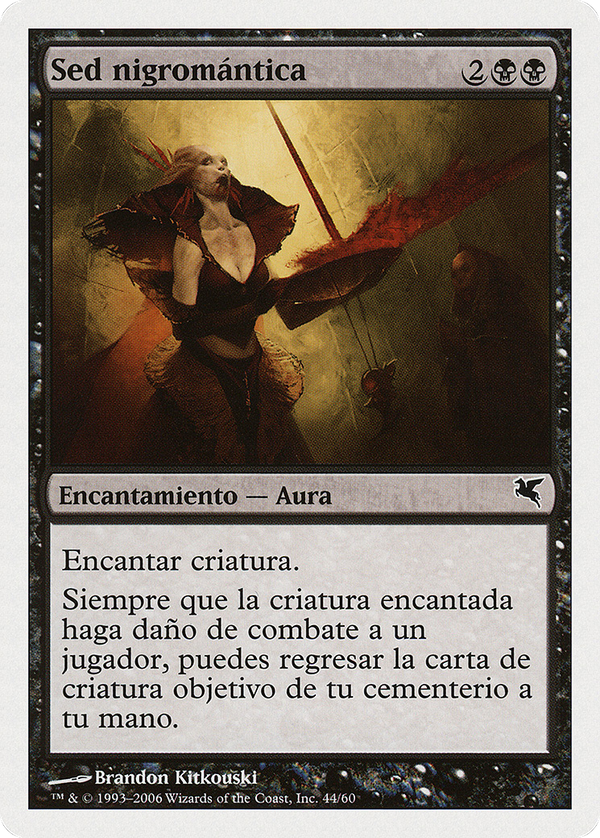
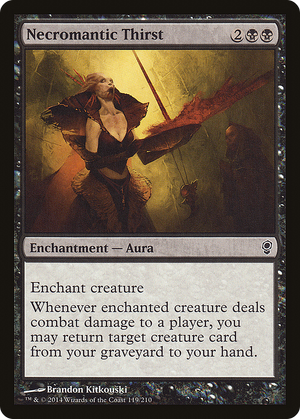
Necromantic Thirst


The recursion sits behind a combat trigger, which is the whole gamble. Most graveyard-to-hand effects pay you on cast or on a death; this one pays only after the enchanted creature connects, so you stack a four-mana Aura onto a body and then ask it to survive a turn cycle and land a hit before it returns a single card. The delay is what you pay for the rate: a repeatable Raise Dead is generous, but it arrives strapped to the most interruptible thing in Magic, an enchanted attacker the opponent has every incentive to remove. What the trigger does not do is scale. Connect for two or connect for ten, the reward is the same single creature card back to hand, which quietly steers the Aura toward bodies that connect reliably rather than bodies that hit hard. An evasive creature that gets in every turn out-returns a ground-bound bruiser that draws a chump block or eats a removal spell in response; consistency of contact beats raw power. It is an engine that wants a board state where combat is already going your way, which makes it a worse pick when you are behind and a snowball when you are ahead. As recursion design it belongs to the older school that gated value behind a clock instead of a per-use mana payment, trusting that the two-card investment (Aura plus host) and the demand for combat damage would keep the loop honest on their own.