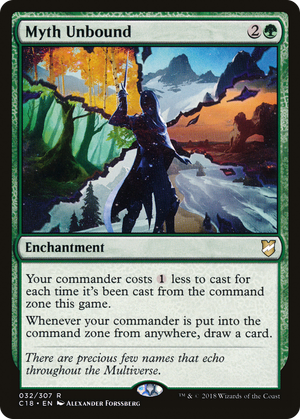
Myth Unbound


The commander tax is the format's built-in governor: every trip back to the command zone adds to your general's next cast, and left unchecked it prices repeated-recast strategies out of the game. This does not reverse that penalty; it blunts it. The tax still climbs, but each cast from the command zone shaves  off the next one, so the net increase drops from to per relaunch. A commander that keeps dying and getting recast still gets more expensive over a game, just at half the rate the rules intended. That halving is the whole design: it targets generals whose value lives in returning to the command zone and casting again, where the escalating tax is the thing that eventually strands the deck. Note what it does not touch: bouncing or blinking a commander sidesteps the command zone entirely, so those decks never pay the tax this softens and never benefit from it. Pairing the reduction with a card drawn whenever your commander lands back in the command zone turns what is normally pure attrition into a resource off every cycle, funding the mana you still owe on the next cast. The enchantment offers nothing to a general you intend to leave on the battlefield; its entire value lives in the recast cadence of a deck that treats the command zone as a revolving door. It is infrastructure, not a generically strong green enchantment: it softens the exact attrition curve the commander tax was written to enforce.
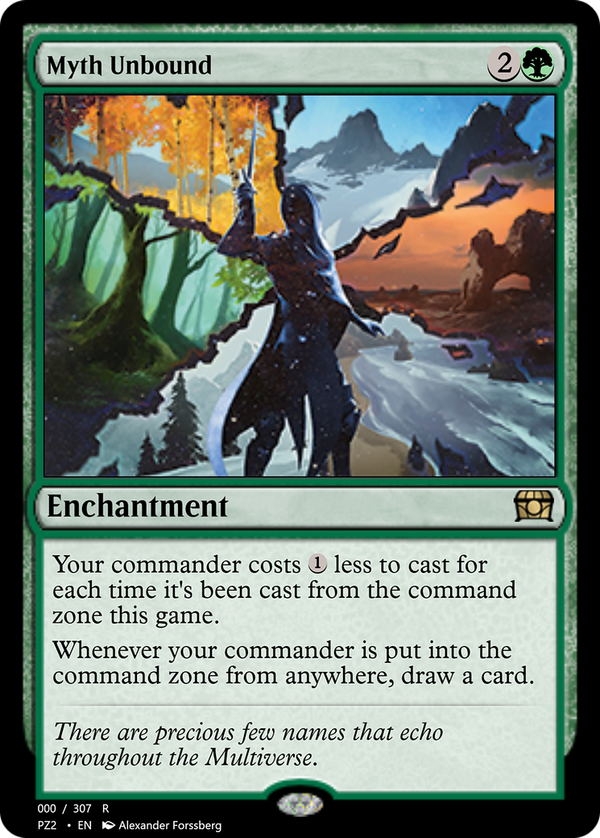
Rules text
less to cast for each time it's been cast from the command zone this game.
Whenever your commander is put into the command zone from anywhere, draw a card.