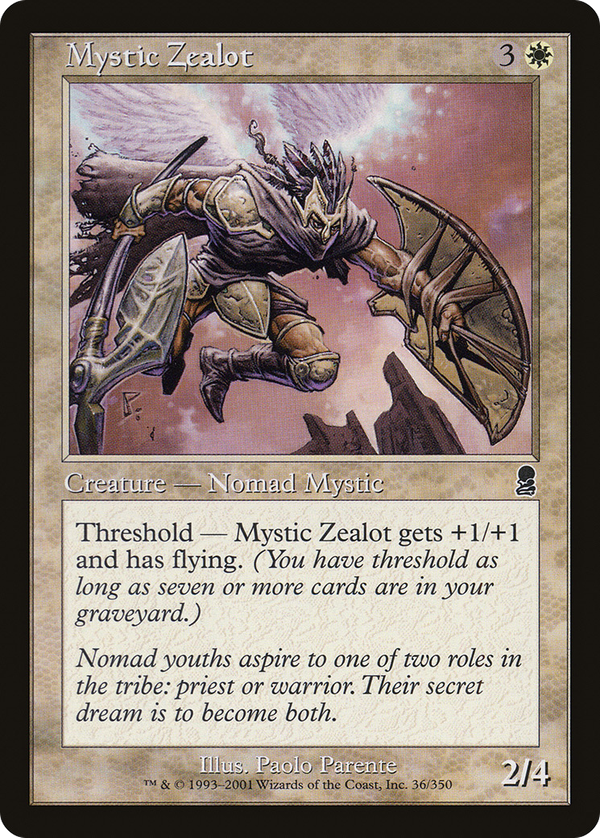
Mystic Zealot


Threshold was an early-era answer to a problem white kept running into: how do you give a defensive color a creature that stays relevant once the game grinds long, without simply stapling two effects together? The front half of the bargain is a 2/4 body, a wall that stonewalls a surprising amount of ground combat once it lands. Fill your graveyard to seven and the same creature becomes a 3/5 flier, crossing the board it used to merely block. The conversion is the whole appeal: a blocker that flips into a clock once your deck has done the work threshold rewards, with no mana sunk into the transition and no activation to telegraph. The tension is that the upgrade is conditional and out of your hands turn to turn (graveyard hate or a stalled draw keeps it earthbound), so it asks to be built around rather than splashed in. It belongs in a graveyard-as-resource shell where filling your own yard and casting cheap spells are virtues, not costs, and it rewards those decks with a creature that is never a dead card: a serviceable mid-game blocker before threshold, a finisher after. The design discipline is that the payoff lives behind a number you have to earn, which keeps the body honest until the deck around it has paid for the flying.