Mystic Compass

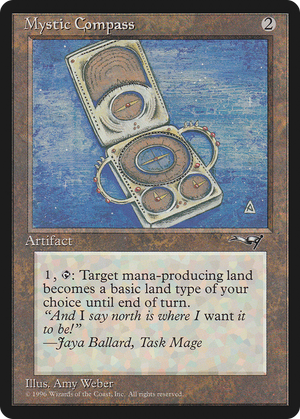
Point it at your own land and it fixes toward whatever basic type a spell demands; point it at an opponent's and it strips a nonbasic's identity for a turn, turning a precious dual into a vanilla Plains or shutting off the single color a key spell needs. That dual targeting is the design pivot. Most fixing of its era only ever helped its controller, but the ability to redirect it across the table made this cheap, repeatable land hate against the dual-land and oddball-mana decks of the period. The until-end-of-turn clause is what stops it from becoming a permanent lock: the effect resets every turn, so it taxes a single key moment rather than building a lasting prison. The colorless cost lets it slot into any deck regardless of color commitment, which is why it read as generic tech rather than a niche tool. What it represents is a snapshot of how land manipulation was once treated as fair, interactive, and worth a card slot, back when an opponent's manabase was a live attack surface. Fetchlands and fully built color-fixing manabases eventually turned the basic-land-type swap into a curiosity rather than a tempo lever worth holding open mana for.
Rules text
 ,
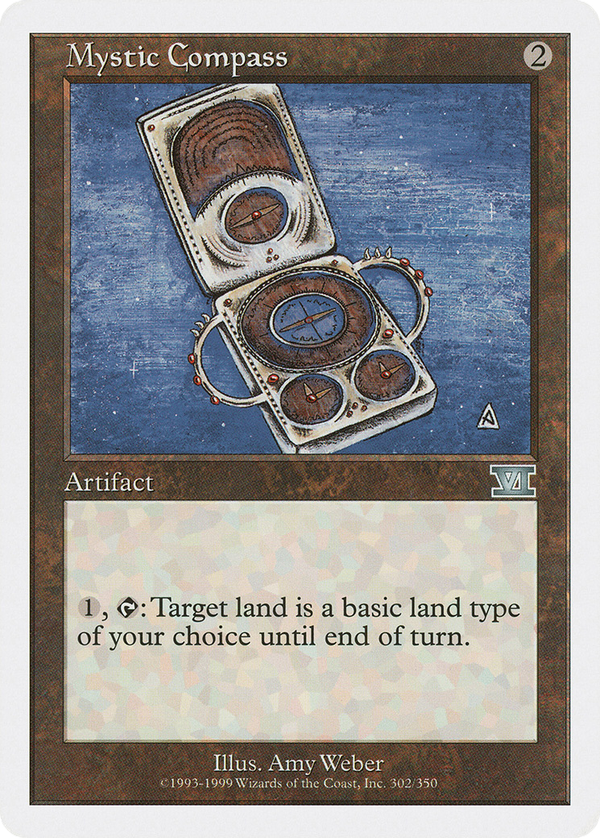
,  : Target land becomes the basic land type of your choice until end of turn.