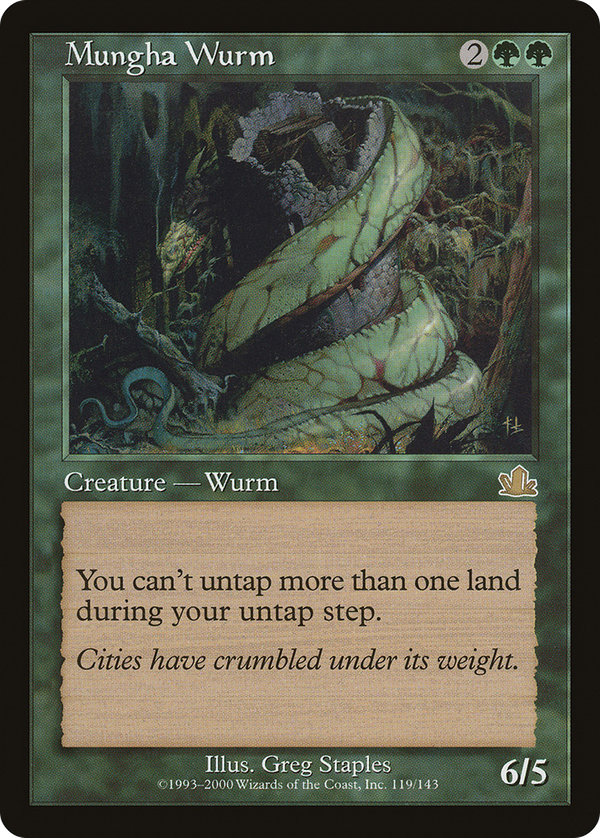
Mungha Wurm


Six power for four mana was a deal struck only by the most aggressive green beaters of the early era, and the price here is paid not in mana up front but in mana foreclosed afterward: untap one land per turn, and whatever you had online when this resolved becomes the engine you keep paying with. New lands you draw and play still enter untapped and tap for mana the turn they arrive, but each land you spend goes dark until that single untap trickle returns it, so your total available mana ratchets downward rather than building. That is a clean piece of cost accounting, and it sorts decks by intent. The wurm rewards a curve that has already peaked, a hand that wants to slam its threat and start swinging instead of grinding toward a bigger plan. To a hyper-aggressive shell that was going to stop developing soon anyway, the drawback is nearly invisible; to a mana-hungry value deck, it is asymmetrically punishing. The design tension belongs to a whole line of cheap fatties from this period that hid their cost in your future board state rather than their casting cost, making the card sharpest in the hands of a player who intends to end things before the strangled mana ever matters and dead weight for anyone who needs the game to last.