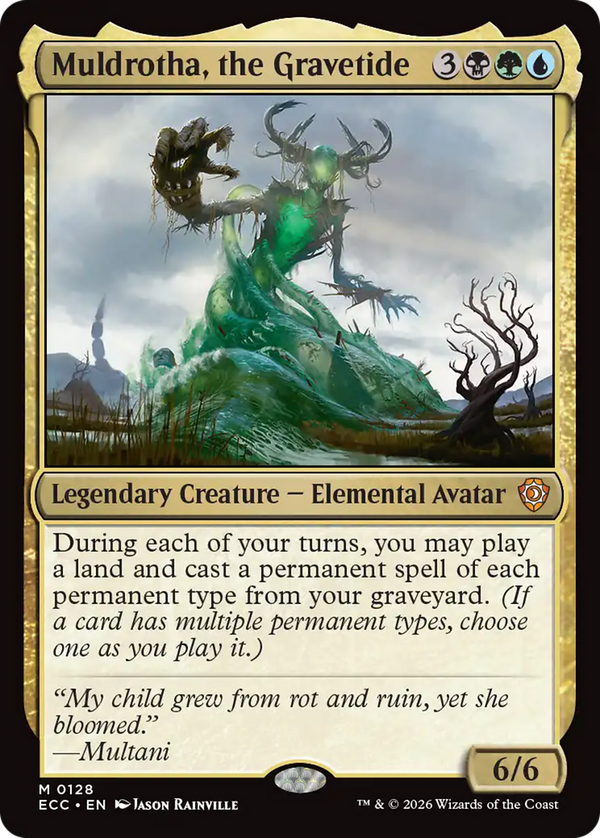
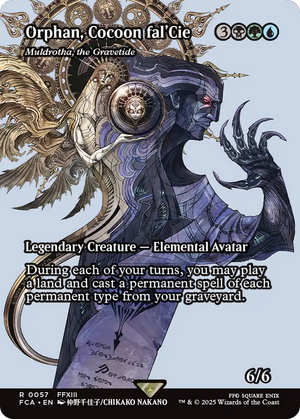
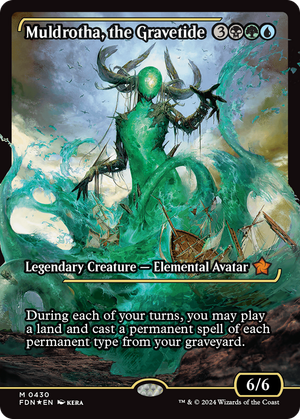
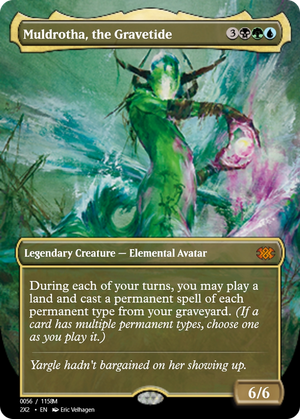
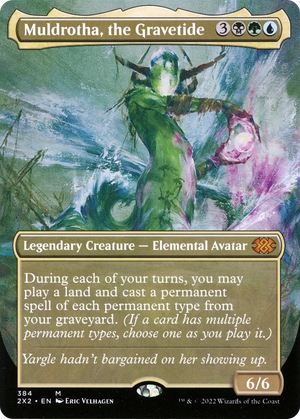
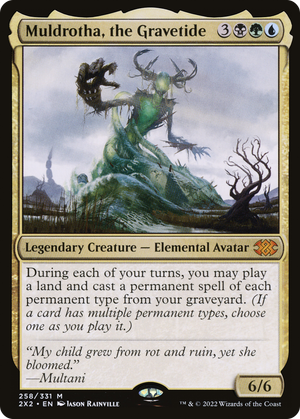
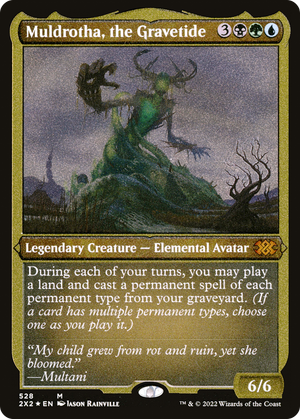
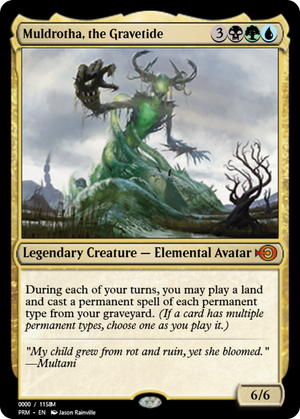
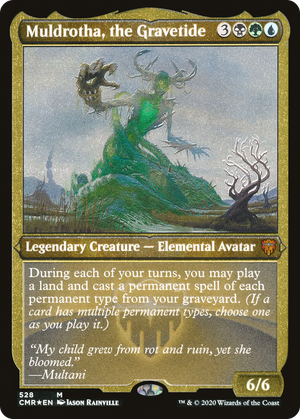
Muldrotha, the Gravetide




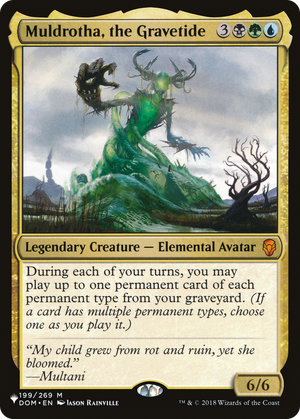
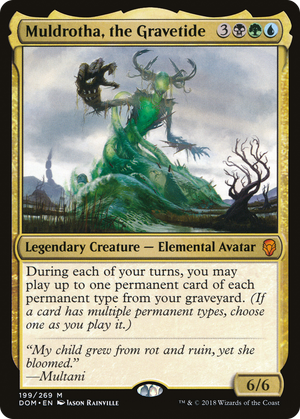
Most graveyard-recursion commanders pick a lane: creatures only, artifacts only, a single Animate Dead loop. The breakthrough here is the partition by permanent type. Once per turn you get one land, one creature, one artifact, one enchantment, one planeswalker out of the yard, and because those slots are independent, the engine compounds in a way that single-axis recursion never does. The graveyard stops being a pile of dead cards and becomes a second hand that refills itself: every fetchland cracked, every creature traded in combat, every artifact sacrificed for value is a card you simply replay next turn. That structure rewards a particular kind of deckbuilding, one that wants its permanents to die and return rather than survive, and it turns sacrifice outlets and self-mill from setup into the actual game plan. What holds the engine short of an infinite loop is the per-type-per-turn cap: you cannot chain the same Sakura-Tribe Elder five times in a turn, so the deck has to spread its recursion across types rather than abuse one. The 6/6 body matters less than the permission, but it does mean the card has to be answered rather than chump-blocked, and at six mana across three colors it arrives late enough that the graveyard is already worth dipping into. The design is the green-black-blue value pile distilled to a single permission: play your graveyard like a second battlefield, one permanent of each kind at a time.