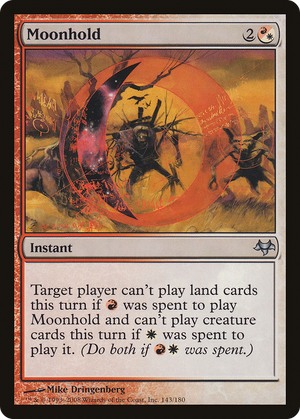
Moonhold


Spend red and your opponent can't play a land; spend white and they can't cast a creature; pay both and you slam the door on both at once. The clever part is where the decision lives. Most dual-color symbols of this design era were access tools: they widened who could cast a spell by letting either color pay. This one repurposes the same payment choice into a mode switch, with no "choose one" printed anywhere in the text. The mode is settled at the moment you tap your lands, not when the spell resolves, which quietly ties the card's ceiling to your manabase. A deck that touches only one of its colors gets one reliable effect; a true two-color shell gets the full clamp. The cost of that flexibility is information and timing. The denial only pays off if you fire it during an opponent's turn before they commit to the line you want to deny, so you are reading their hand and their plan rather than answering a spell already on the stack. It taxes a known sequence far better than a surprise, and it does nothing against a draw that wasn't going to lean on lands or creatures that turn anyway. As denial design, it asks the caster to predict instead of react, and hands the biggest reward to the manabase that can credibly threaten both halves in the same breath.
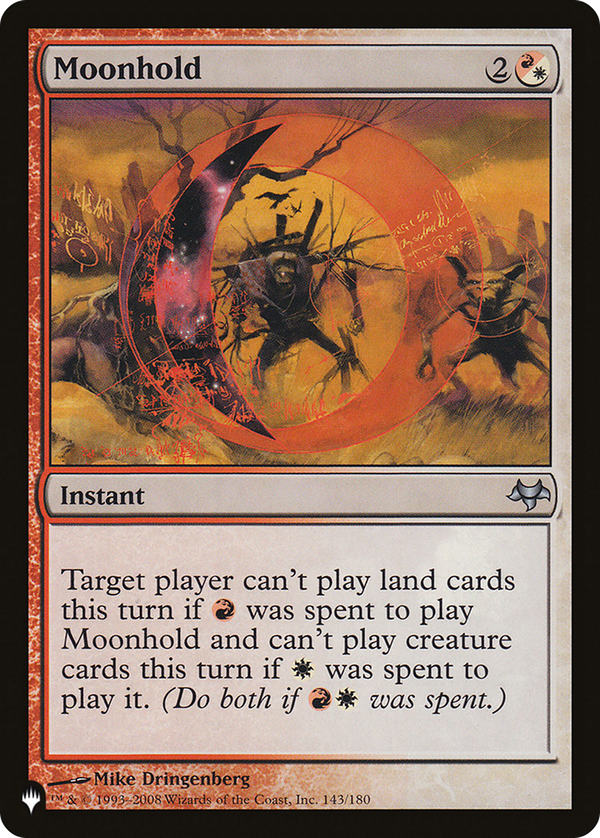
Rules text
 was spent to cast this spell and can't cast creature spells this turn if
  was spent to cast this spell. (Do both if was spent.)