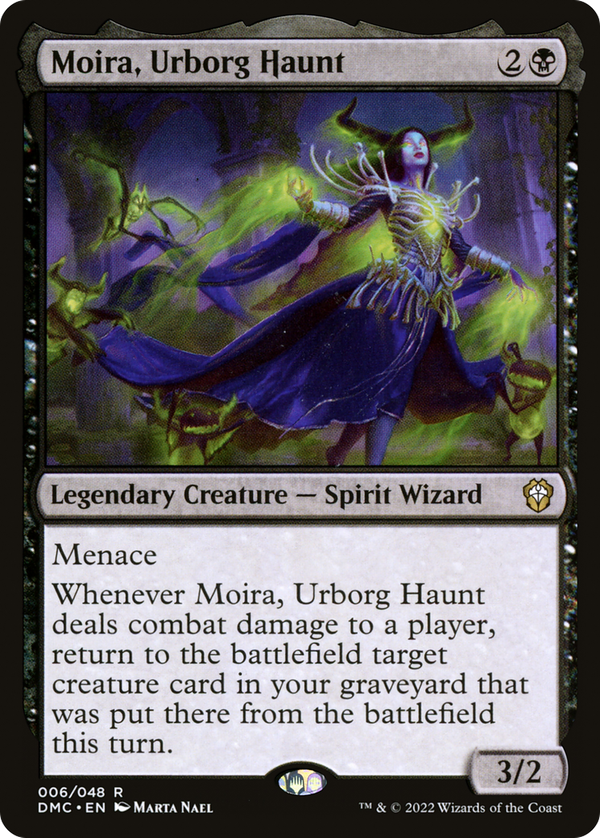
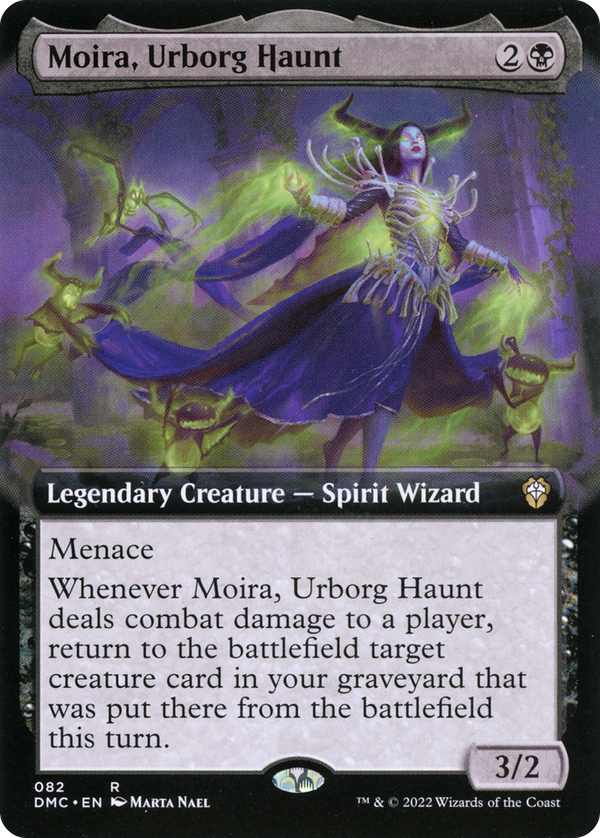
Moira, Urborg Haunt


The reanimation is scoped so tightly it changes what you build around it. Where most graveyard recursion asks only that a creature sit in the yard, this one restricts the target to a creature card put there from the battlefield this turn: the death has to be fresh, part of the same turn cycle as the hit. That coupling makes the design a combat-and-sacrifice engine rather than a raw recursion piece. The window is wider than it first reads, though, because combat damage is simultaneous. A blocker that dies trading with one of your attackers in the very step where Moira connects has already reached the graveyard the moment the damage resolves, so it is a legal target, right alongside anything you sacrificed pre-combat or fed to your own removal earlier in the turn. Menace is load-bearing here, not flavor. A 3/2 body with a hard-to-block clause is what gets the trigger to land through a developed board, and the whole loop collapses if she never deals damage. The value is chained to the combat step and to a single turn's worth of death triggers, which pushes toward disposable fodder and sacrifice payoffs you can cycle rather than one expensive bomb to loop. It is a small, deliberate aristocrats-adjacent commander: sacrifice, swing, recur, repeat, with the same-turn restriction doing the work a finality counter does on wider recursion, keeping the engine lunging forward one combat at a time.