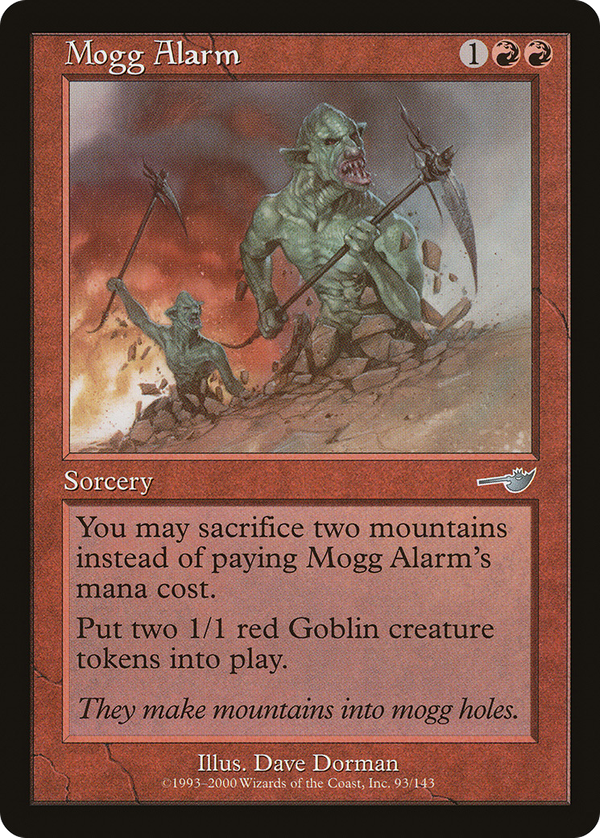
Mogg Alarm


Two Mountains in, two Goblins out, and not a drop of mana spent: that is the swap on offer, and a deck has to want to make it. Paying the printed is the honest line; sacking a pair of lands is the one the card is really built around. The catch is that you still spend the card and you still spend the Mountains, so this is never something for nothing. It is board presence traded for board presence, lands liquidated into bodies. The reason a deck reaches for the alternative cost is not to save mana it has nothing else to do with: it is to spill goblins onto a board on a turn when every floating red is already committed to something better, sequencing two land sacrifices around a turn that was already going to be busy. A sacrifice deck gets even more from it, drawing a four-event burst from a single card: two land deaths and two token entries feeding death triggers, recursion, or a Goblin payoff. That hard land cost is what separates it from other burst-token spells, letting it resolve when mana is fully promised elsewhere. It belongs to an early line of red cards probing how cheaply you could dump a board onto the table, a question Empty the Warrens and Krenko's Command later picked up with restrictions of their own: a storm count in the first case, a body and a tap in the second.