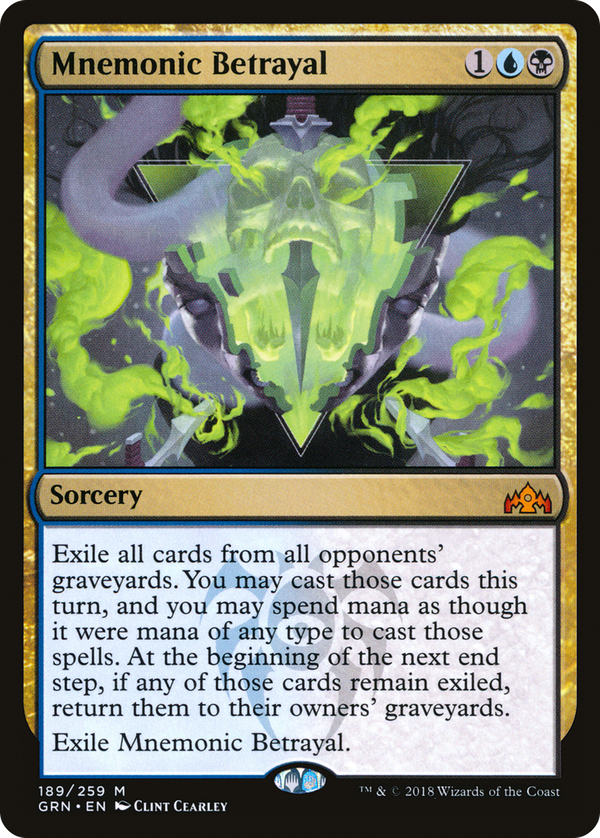
Mnemonic Betrayal



Most graveyard hate either nukes the yard or steals a single card; this does something stranger, a wholesale conscription of everything in your opponents' graveyards for a single turn. The borrowing window is the whole point. You exile every card they have buried, gain the right to cast any of them with mana of any type (colorless requirements included, not just colored costs), and then surrender the unspent leftovers at the next end step. That flexible-mana clause is what turns a Dimir spell into an honest gamble on the opposing pile: you are not casting these cards on your terms, you are casting them on theirs, and only the ones you can actually pay for and want to play this turn ever benefit you. Note the seam in the timing, too: the spells leave exile when cast, so anything that resolves and goes to a graveyard or the battlefield never returns; only the cards you fail to use go home. The design rewards reading an opponent's discards and flashback fodder as a menu rather than a threat, and it punishes the durdle deck that fills its own bin with bombs by letting you cast those bombs against them for a turn. It is theft as denial and denial as theft at once, which is about as Dimir a sentence as the guild ever earned.