Mizzium Transreliquat

The clever wrinkle lives in the second activation: pay the colored cost instead of the generic one, and the copy keeps the line of text that let it copy in the first place. That clause solves a problem most copy designs of the era simply accept. A Clone resolves into one creature and stays that creature; the value is front-loaded and finite. By writing "except it has this ability" into the copy, this artifact refuses to spend itself. The cheap generic version gives you a throwaway copy for the turn (mimic a key artifact's tap ability, become a mana rock to break parity for a beat), while the 

 version turns the card into a permanent shapeshifting engine: become any artifact on the board, retain the line that lets you become the next one, and pivot again next turn into whatever the board has grown. The colored cost is what pays for that persistence. You trade the convenience of a generic activation for an answer that never goes stale, a single permanent that re-roles every turn to match the table's best artifact. That recursion clause is what separates this from a generic copy effect, and it scales directly with the density of artifacts worth becoming: the more targets on the board, the more the engine is worth. That dependence on a deep artifact pool is what has kept it a quiet favorite in formats with plenty to mimic.
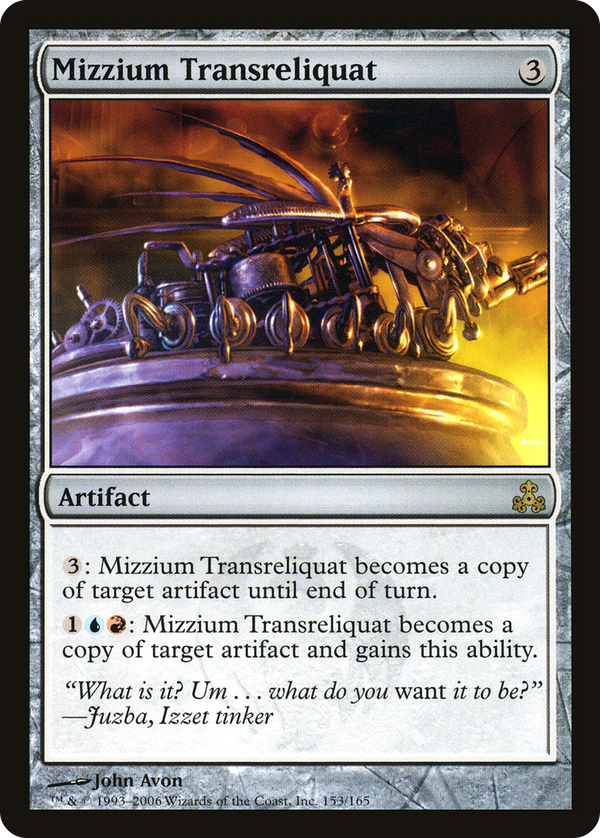
Rules text
: This artifact becomes a copy of target artifact until end of turn.
: This artifact becomes a copy of target artifact, except it has this ability.