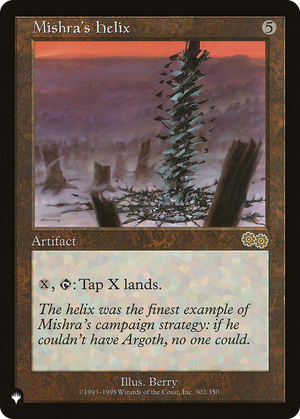
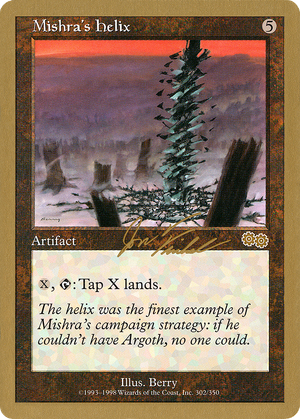
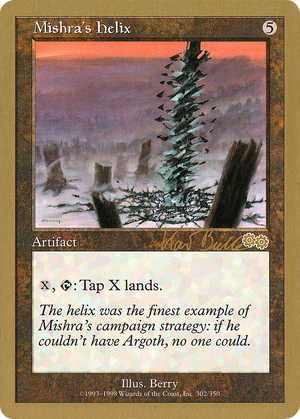
Mishra's Helix

Tap-down effects had existed before, but tying one to a repeatable, scalable engine on a permanent that costs no recurring mana to recover was the engineering trick here. The  in the activation cost means the lock scales with whatever mana you have left: pay one and tap a single land at end of turn, or empty your pool and tap an entire opponent's manabase to zero. Crucially, the lands only stay tapped, not phased or frozen; they untap on their controller's next untap step, so the effect functions as a tax you levy every turn the artifact survives rather than an outright prison. That distinction is the whole design. A permanent stax piece that locked lands for good would warp games; this one merely demands you keep paying, turn after turn, to keep the screws turning, and the opponent always gets their lands back the moment you stop. Stalling an opponent's mana development while you advance your own is the axis it operates on: every activation is a Time Walk priced in mana rather than card, with the catch that you are spending your own resources to deny theirs. The era that produced artifacts spitting out absurd mana made those the headline; Mishra's Helix is the quieter half of that conversation, the piece that asks what you do with a mana advantage once you have one, and answers by turning a surplus into a chokehold.
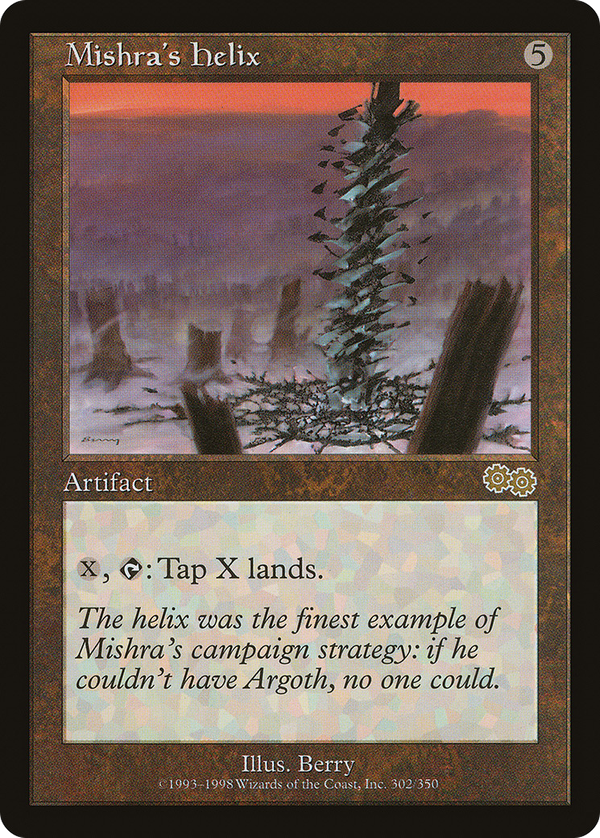
Rules text
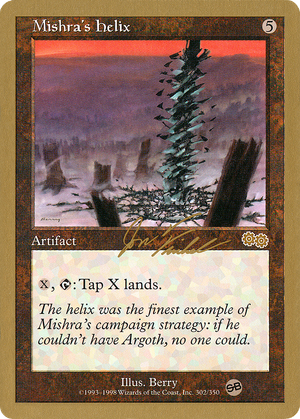
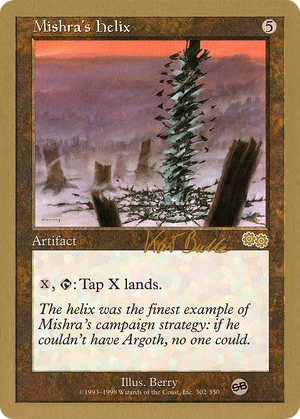
,  : Tap X target lands.