Mirror March


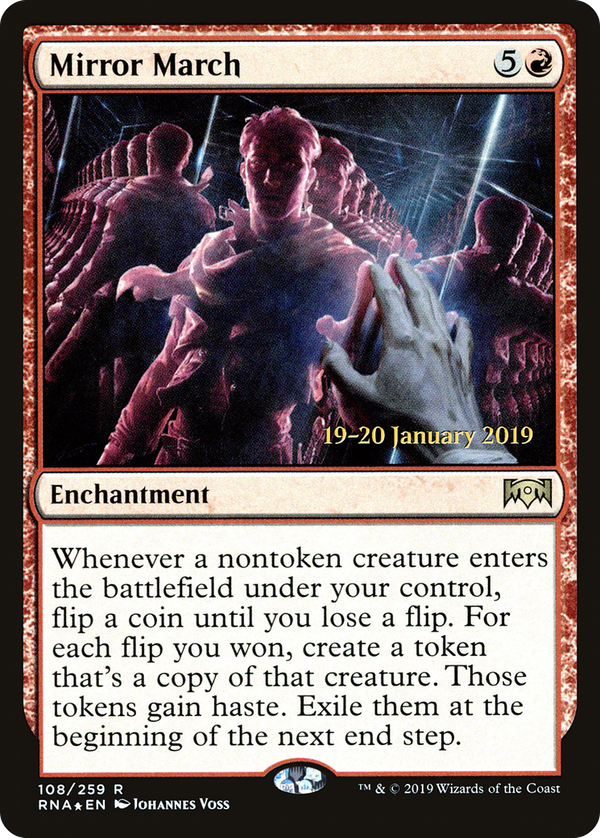
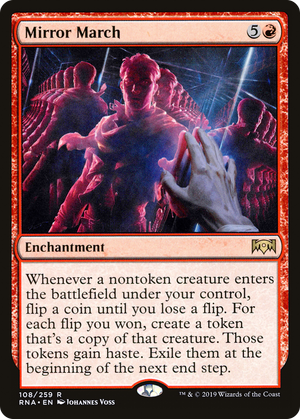
The variance is the whole design, and it is deliberately unbounded. Most token-doubling effects hand you a fixed multiplier: cast it, get one extra, know the math. This one hands the count to a coin, and the "flip until you lose" structure means the tail on the distribution never quite closes. The first flip is a coin toss, so half your triggers make nothing at all; a quarter make exactly one copy; and each additional copy costs another consecutive win, halving in probability but never reaching zero. The run that gives you three, four, five hasted duplicates is always live, and the geometric decay means it lands often enough to be a plan rather than a fantasy. The exile clause at the next end step is the tax that pays for the ceiling: these are combat-step bodies, alpha-strike fuel, not a board you get to keep. That framing tells you exactly what to build. Copies are minted during the ability's resolution, so any enters-the-battlefield trigger on the original creature fires again on every copy the coins produce, stacking a pile of effects on top of the raw power. Blink and flicker engines turn the enchantment into a repeatable slot machine, since each re-entry rolls the dice fresh. It asks nothing in deckbuilding beyond a creature curve worth copying and gives back an outcome you cannot plan around, only aim at. That refusal to promise a number is why the card has never settled into a fair-value role.