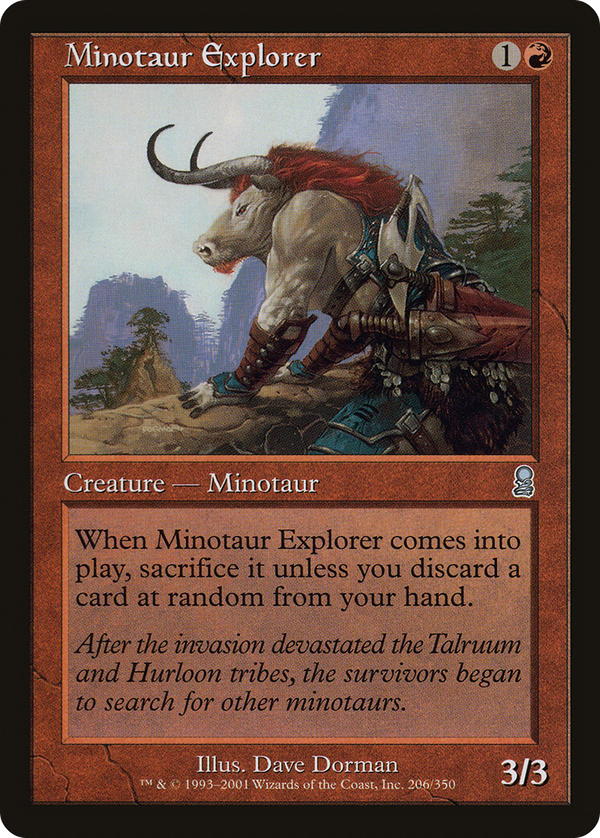
Minotaur Explorer


The discard at random is the entire transaction here: the body enters and immediately demands payment, and you either sacrifice it or pitch a card you do not get to choose. The randomness never decides whether the creature stays, only which card leaves your hand, so the real cost is loss of control over what hits the graveyard. In a pure curve-out plan that pitch is straight tax, costing you a land if you are lucky and a payoff if you are not. The design reads clearly alongside the graveyard mechanics of its era: madness rewards getting a card discarded at the wrong moment, flashback turns the pitched spell into a second cast, and threshold counts every card in the bin as progress. Built around any of those, this stops being a beater that incidentally costs you a card and becomes a feed line that happens to attack for three. The random clause is what resists clean enabling, since you cannot aim the discard at the spell you actually want in the yard. That loss of aim is what separates it from the deliberate looters and rummagers that later defined graveyard-fuel strategies: a blunt early swing at a tension those cards resolved with cleaner edges, treating discard as fuel while still charging you for the privilege of not getting to pick.